
Tina Engstrom

Fighting History Exhibition at Tate Britain

The Fighting History exhibition launching at Tate Britain in June will focus on the conflict, martyrdom and catastrophe found in history painting from the eighteenth century to the present day.

In England, history painting first emerged in the eighteenth century. Artists such as John Singleton Copley (1738–1815) and Benjamin West (1738–1820) presented recent British battles and deaths in the grandest possible manner and depicted scenes from ancient history to remind viewers of the timeless virtues to which they should aspire. This exhibition will show how these traditions of history painting have persisted in the work of British modernists such as Winifred Knights and Stanley Spencer, in Richard Hamilton and Rita Donagh’s work of the 1980s, in the work of Dexter Dalwood and in recent installations such as Jeremy Deller’s Battle of Orgreave 2001. It will celebrate the emotional power of history painting and show its persistent place in art.

The Fighting History exhibition at Tate Britain is on 9 June – 13 September 2015. 
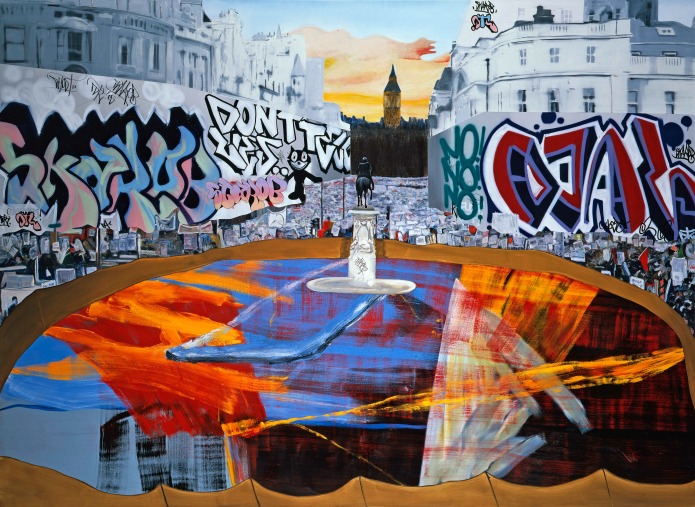
The Poll Tax Riot 2005

The Poll Tax Riots 2005. Photo: © The Artist and Simon Lee Gallery, London & Hong Kong.

Leave a Reply

Your email address will not be published. Required fields are marked *

You may also like

Three Ships In London To Visit

London is a port city, and Britain became great because of its navy and ability to trade across the globe. The capital’s wealth is built upon that sea trade. There are reminders of London's maritime history everywhere. In Trafalgar Square, we commemorate the 1805 victory (and the death) of Admiral Lord Nelson at the Battle of Trafalgar. At Tower Hill, we remember the 36,000 merchant mariners lost at sea with no known grave. And the Museum of London Docklands examines the triangular trade in goods, sugar and slaves, upon which so much of the city’s wealth was built.

Read more

Top 10 Objects To Surprise You At The British Museum

The British Museum is the most visited museum in London. Visitors from all over the world are drawn to the museum to see with their own eyes world-famous artefacts, such as the Rosetta Stone or the Parthenon frieze, artefacts that might have only be seen in school or art books. They also come to experience other cultures, because after all the British Museum is the museum of the world for the world. But for the discerning visitor a scratch beneath the surface of all the "celebrity" objects can reveal some real surprises. Here is my list of such surprises.

Read more