



Vincent Square in the Westminster area of London looks peaceful today, but it has a history that is far more interesting than many visitors might expect. I first looked into its name when I was meeting clients at a hotel there and discovered a story I did not know before. It is a good example of how even a familiar place in London can open up unexpected connections to the past.
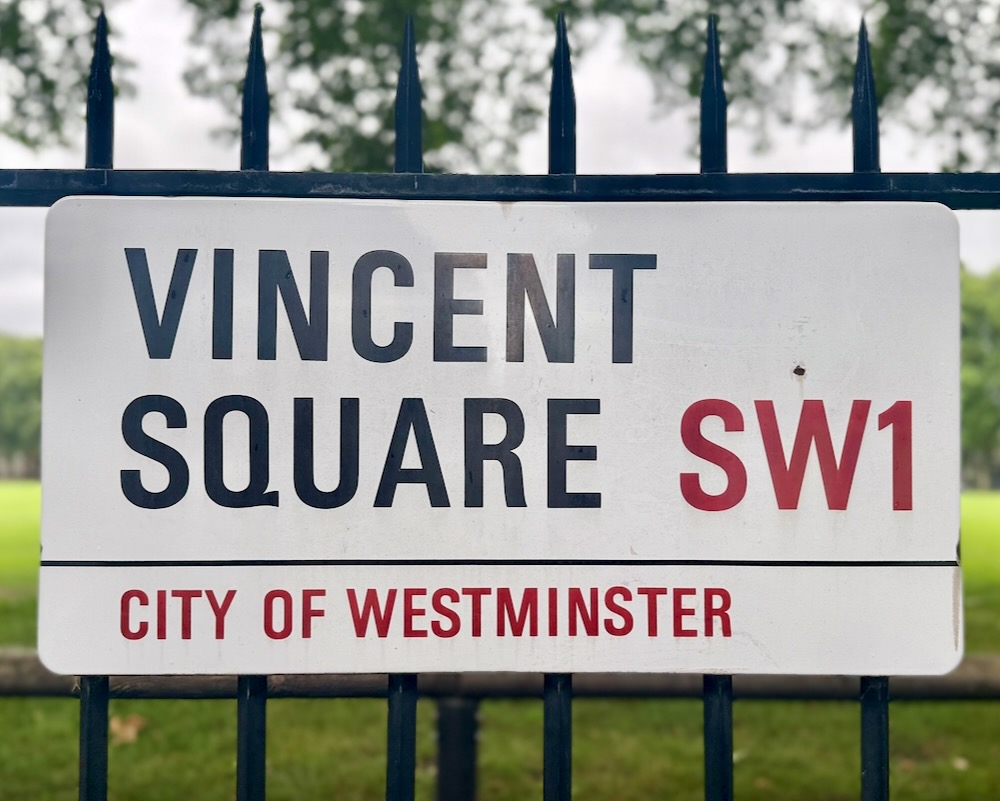 Vincent Square in London. Photo Credit: © Ursula Petula Barzey.
History of Vincent Square in London
Vincent Square is located near to the Tate Britain Art Gallery. It is London’s largest privately owned square, covering thirteen acres. The playing field in the centre is an obvious feature, owned and used by Westminster School.
The Square was named after William Vincent, who died in 1815. He was the Dean of Westminster and the headmaster of Westminster School. Westminster Abbey can be seen in the distance from the Square – a nice backdrop. The area was once part of Tothill Fields, stretching from St James’s Park to the banks of the Thames. Its uses over the centuries varied, with jousting tournaments and ceremonies, a weekly market and an annual fayre, military musters, a playing ground, and the site of a Pest House called Five Chimnies and a House of Correction.
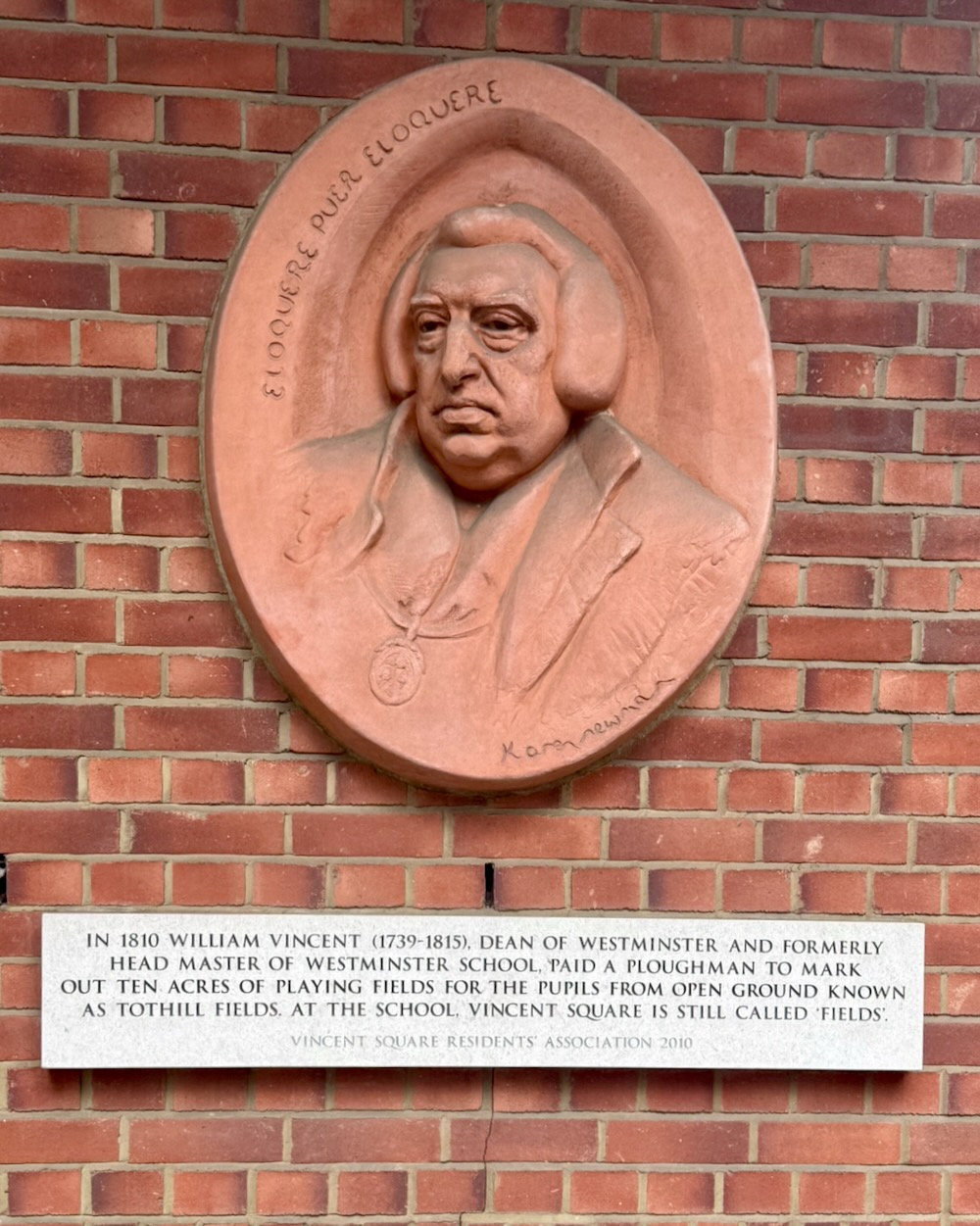 Plaque to William Vincent, formely Dean of Westminster. Photo Credit: © Ursula Petula Barzey.
Vincent Square was also used as a large burial site for victims of the Great Plague of 1665. Its use as a death camp and cemetery for 1,200 Scottish prisoners sparked a desire to learn more about this. Guides may know the history of Scotland Yard in Whitehall and the Scottish Kings who stayed in temporary accommodation there when invited to visit the English Monarchy. But the presence of 1,200 Scottish soldiers in London who starved to death? My research revealed websites that described the Battle of Worcester in 1651 and the fate of the defeated Scots.
King Charles II was fighting for his throne with the aid of Scottish Royalists. He was fighting against Oliver Cromwell who had a more organised army. The King was defeated and he fled to France and went into exile. 8,000 Scotsmen were taken prisoner ‘driven like cattle’ to London. As one witness described the convoy, ‘all of them [were] stript, many of them cutt, some without stockings or shoes and scarce so much left upon them as to cover their nakedness, eating peas and handfuls of straw in their hands which they had pulled upon the fields as they passed’.
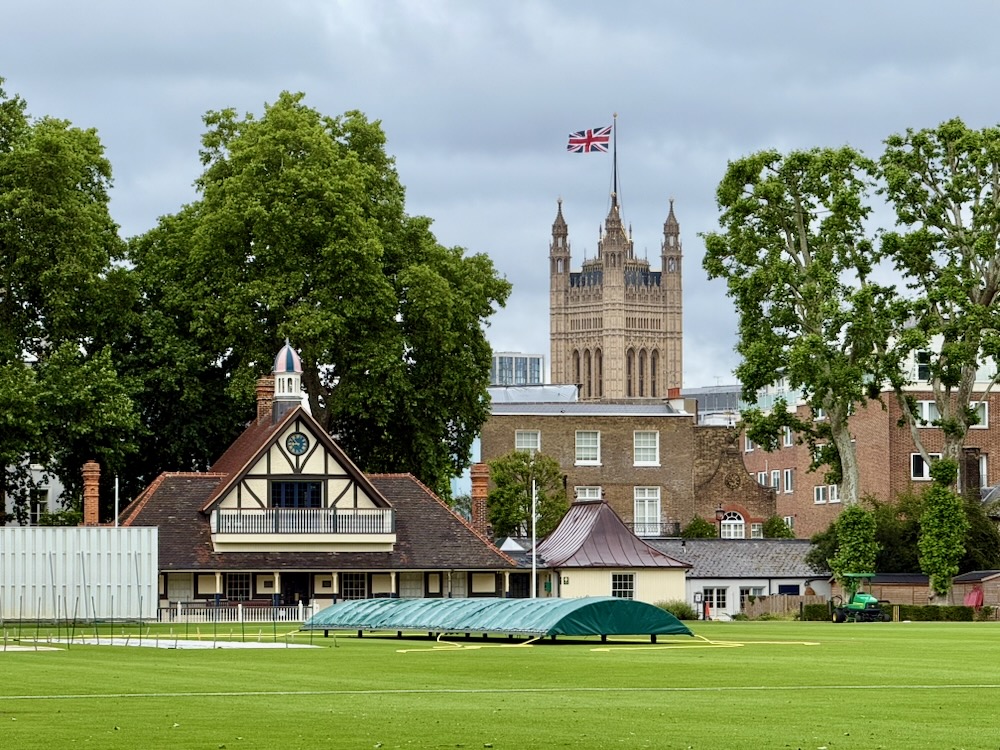 View towards the Westminster School Cricket Pavilion in Vincent Square. Photo Credit: © Ursula Petula Barzey.
The prisoners were placed in temporary prison camps in London and other cities. The records of those soldiers showed that ‘1,000 prisoners were put to work draining the fens in East Anglia; 1,500 shipped out to the gold mines of Guinea, others were sent to labour in Barbados and Virginia; and in November 1651, 272 Scots were herded aboard the Ketch John and Sara, bound for New England’.
The 1.200 prisoners were ‘confined for a few months on the artillery grounds at Tuthill fields, which were about a half mile from Westminster Palace’. It was recorded that ‘they were allowed daily rations of a pound of bread and a half a pound of cheese. Shelter thought to be provided only for the sick.’ Many died of starvation, disease and infection, while Cromwell’s Council of State debated what to do with the defeated soldiers.
Interestingly, St.Margaret’s, Westminster has, in its churchwardens’ records ‘a payment of thirty shillings to Thomas Wright, for sixty-seven loads of soil laid on the graves in Tothill Fields, wherein 1,200 Scotch prisoners, taken at the Battle of Worcester, were buried.’ With the extensive redevelopment of the fields over the following centuries, the exact location of the graves has not been accurately established.
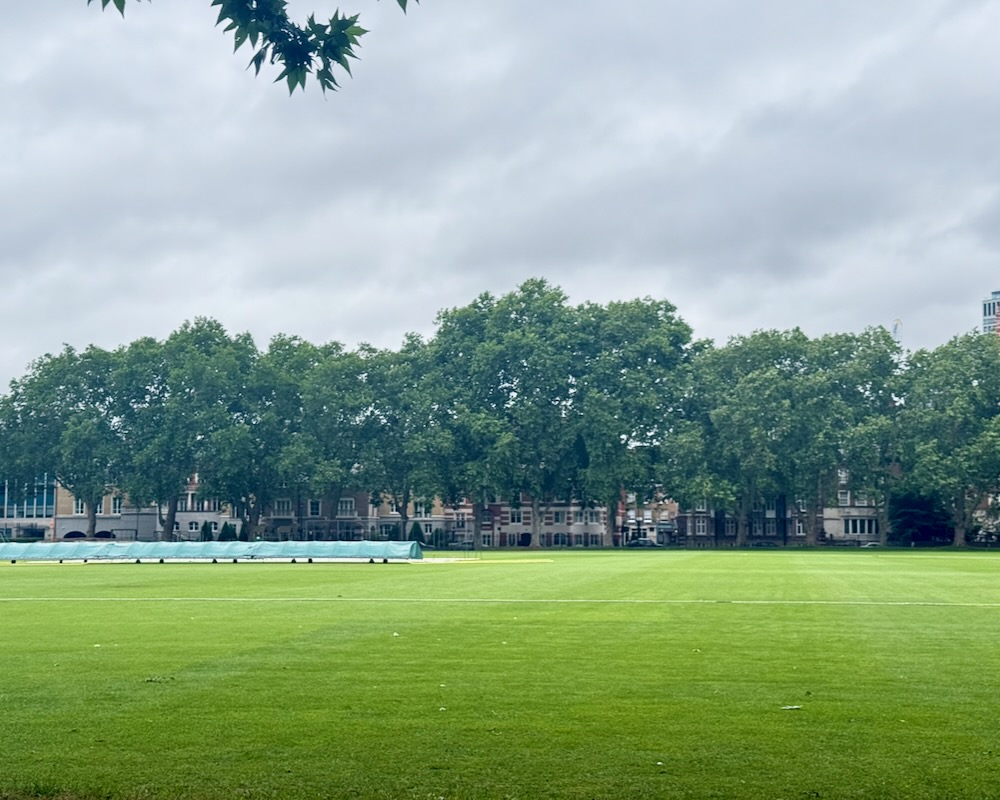 View of field in Vincent Square in London. Photo Credit: © Ursula Petula Barzey.
Those men who were shipped to New England were sold as bonded or indentured labour, working for many years until their release. They were not high on the social scale and were treated as property, sold for between £16 and £30, and listed in wills and other documents. just like the African enslaved. The Puritans disliked them on religious and political grounds. Most spoke Gaelic and could not read or write, and life for these new immigrants was difficult. There are a few stories about some of the men who became notable citizens and achieved respectable status in New England.
Well-known Americans have traced their family history back to Scottish prisoners transported after the Battle of Worcester, some of whom were shipped to New England on the John and Sara. For visitors with Scottish or American roots, Vincent Square may hold an unexpected personal connection. It also touches on a wider global story, linking London to colonial America and, later, to the Royal African Company, established by Charles II and his brother James, Duke of York, whose investments tied the city to gold trading and the transatlantic slave trade.


Leave a Reply