



21 DNA-inspired double helix sculptures have appeared across London as part of Cancer Research UK’s campaign to raise awareness and funds for the Francis Crick Institute, a world-leading centre of biomedical research and innovation due to open in 2016.
The sculptures have been designed by leading artists, designers and sculptors from across the world, including Ai WeiWei, Zaha Hadid and Orla Kiely. Each of the designers was asked ‘what’s in your DNA?’ and the results are a mixture of intriguing and colourful designs. Each sculpture also has a fun fact about DNA on the base, for example: Did you know you share about 90 per cent of your DNA with a mouse, and about 50 per cent with a banana?
For more information on the DNA sculptures, visit the website for design firm Someone who spearheaded the project with Cancer Research UK. Also as you explore London, be sure to check out the sculptures which are currently being displayed on the DNA Art Trail throughout London for ten weeks, before being auctioned at Christie’s in September.
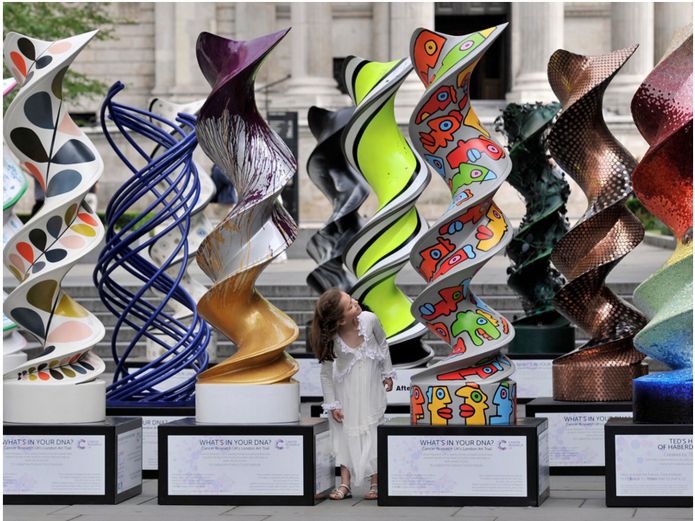
DNA-inspired double helix sculptures across London Photo: ©Someone/Cancer Research Uk.
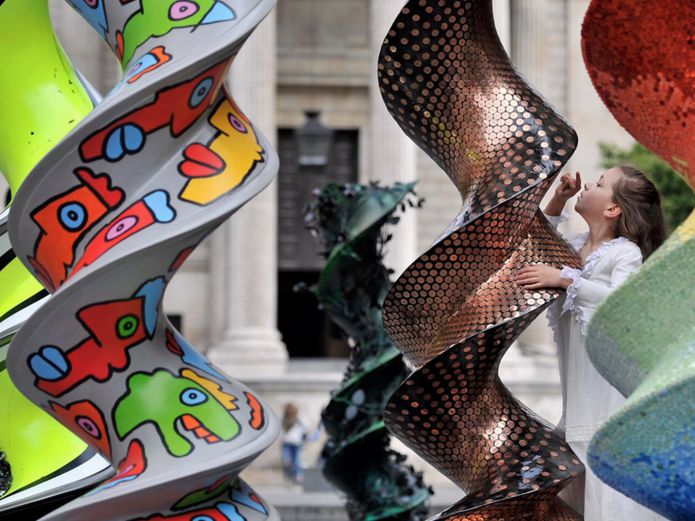
DNA-inspired double helix sculptures across London Photo: ©Someone/Cancer Research Uk.
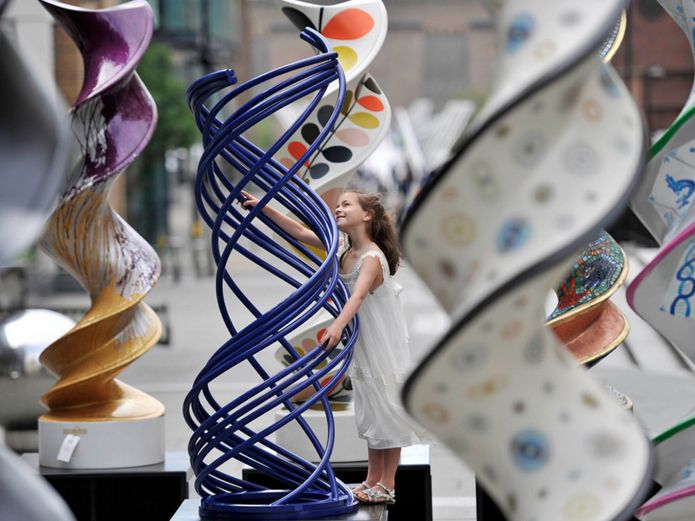
DNA-inspired double helix sculptures across London Photo: ©Someone/Cancer Research Uk.


Leave a Reply