



More than anyone else, Charles Dickens invented the British Christmas with A Christmas Carol, his story about Ebenezer Scrooge and the ghosts of Christmas Past, Present, and Future. It was first published in 1843 and has been adapted for stage and screen many times. No surprise, then, that four museums in the United Kingdom are dedicated to Charles Dickens (including one in London), more than any other British writer.
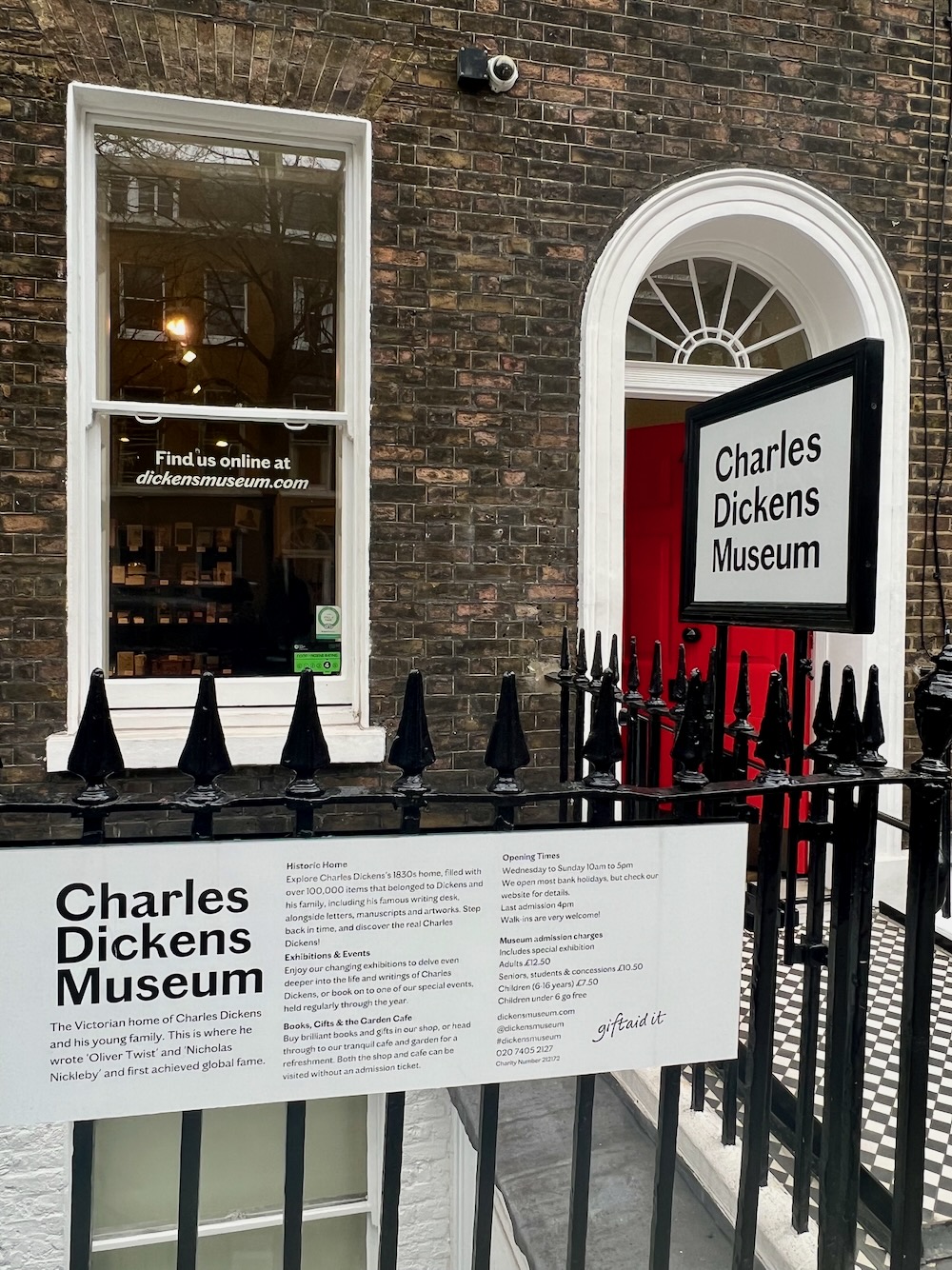 Entrance to Charles Dickens Museum in London. Photo Credit: © Ursula Petula Barzey.
Christmas is a particularly fitting time to visit the Charles Dickens Museum at 48 Doughty Street, the author’s former London home. This year, its festive program includes performances of A Christmas Carol by actor James Swanton on selected dates in December, alongside a special Christmas Eve opening. These seasonal events bring Dickens’s much-loved story to life and celebrate his enduring association with Christmas.
The museum’s latest exhibition, Dickensian London: The Magic Lantern City, explores the city Dickens knew and brought to life in his writing. Evoking London’s sights, sounds, and smells, it examines the stark contrasts of wealth and poverty that shaped his work. Highlights include Dickens’s walking stick, his Oliver Twist manuscript, and an original sketch of Fagin. The exhibition runs from October 21, 2026, to April 18, 2027, and is included with museum admission.
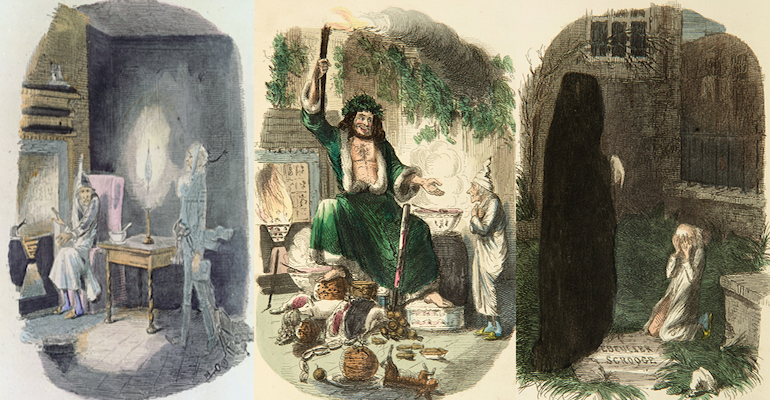 Christmas Sketches: Ghost of an Idea: Unwrapping ‘A Christmas Carol.’ Photo Credit: © Charles Dickens Museum London.
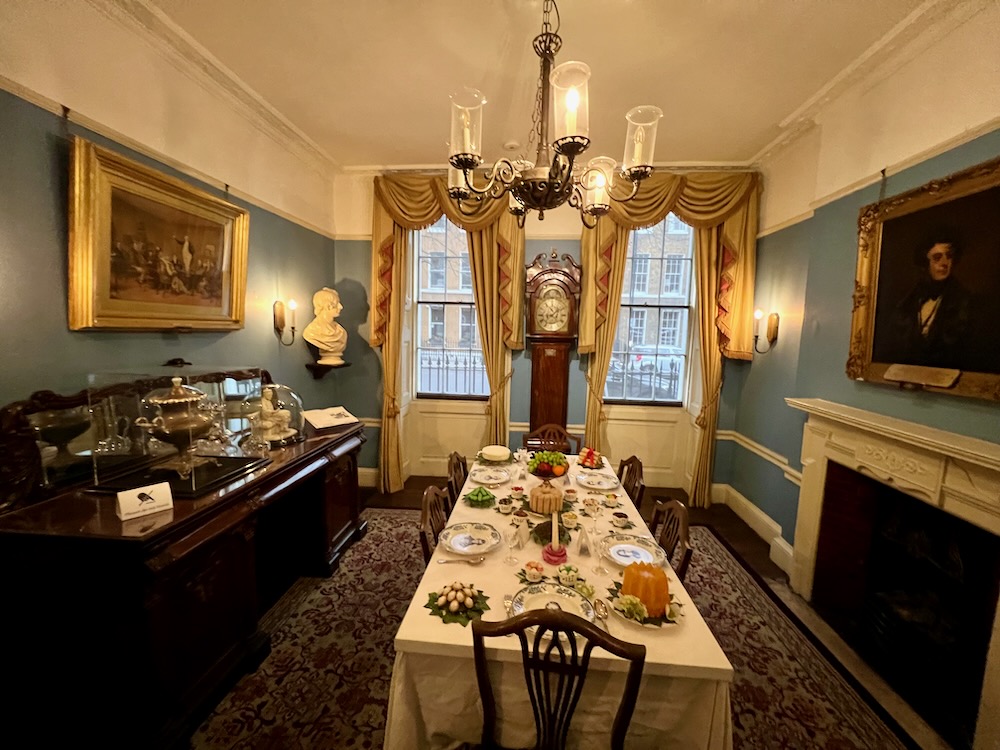 Dining room table at Charles Dickens Museum in London. Photo Credit: © Ursula Petula Barzey.
London Blue Badge Tourist Guides are often asked to do literary and Dickens-themed tours highlighting places that inspired our most famous novelist. Dickens made his name with The Pickwick Papers and went on to write other novels such as David Copperfield, Oliver Twist, and Bleak House. His stories are often haunted by the debtor’s prison where his father was sent. The young Charles was sent to work at a factory in Charing Cross – an experience he hated – in order to help the family finances. After achieving fame and fortune, Charles Dickens died at the age of fifty-eight and was buried in Poets’ Corner, Westminster Abbey.
There are four museums in the United Kingdom dedicated to Charles Dickens, more than any other British writer:
• The Charles Dickens Museum London at 48 Doughty Street is open Tuesday to Sunday;
• The Charles Dickens Birthplace Museum in Portsmouth;
• The Dickens House Museum, Broadstairs, Betsy Trotwood’s house in David Copperfield;
• Gad’s Hill Place, Kent, Dickens’ home in later years, where he died in 1870. This is now a school but can be visited at weekends by prior arrangement.
Get in touch for a Blue Badge Tourist Guide-led Charles Dickens London Tour.
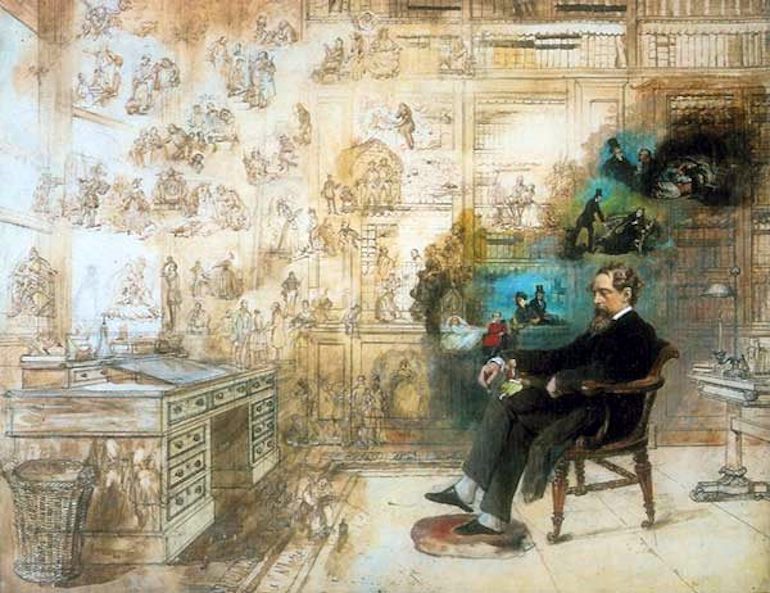 Dickens’s Dream by Robert William Buss, portraying Dickens at his desk at Gads Hill Place, surrounded by many of his characters. Photo Credit: © Wikimedia Commons.
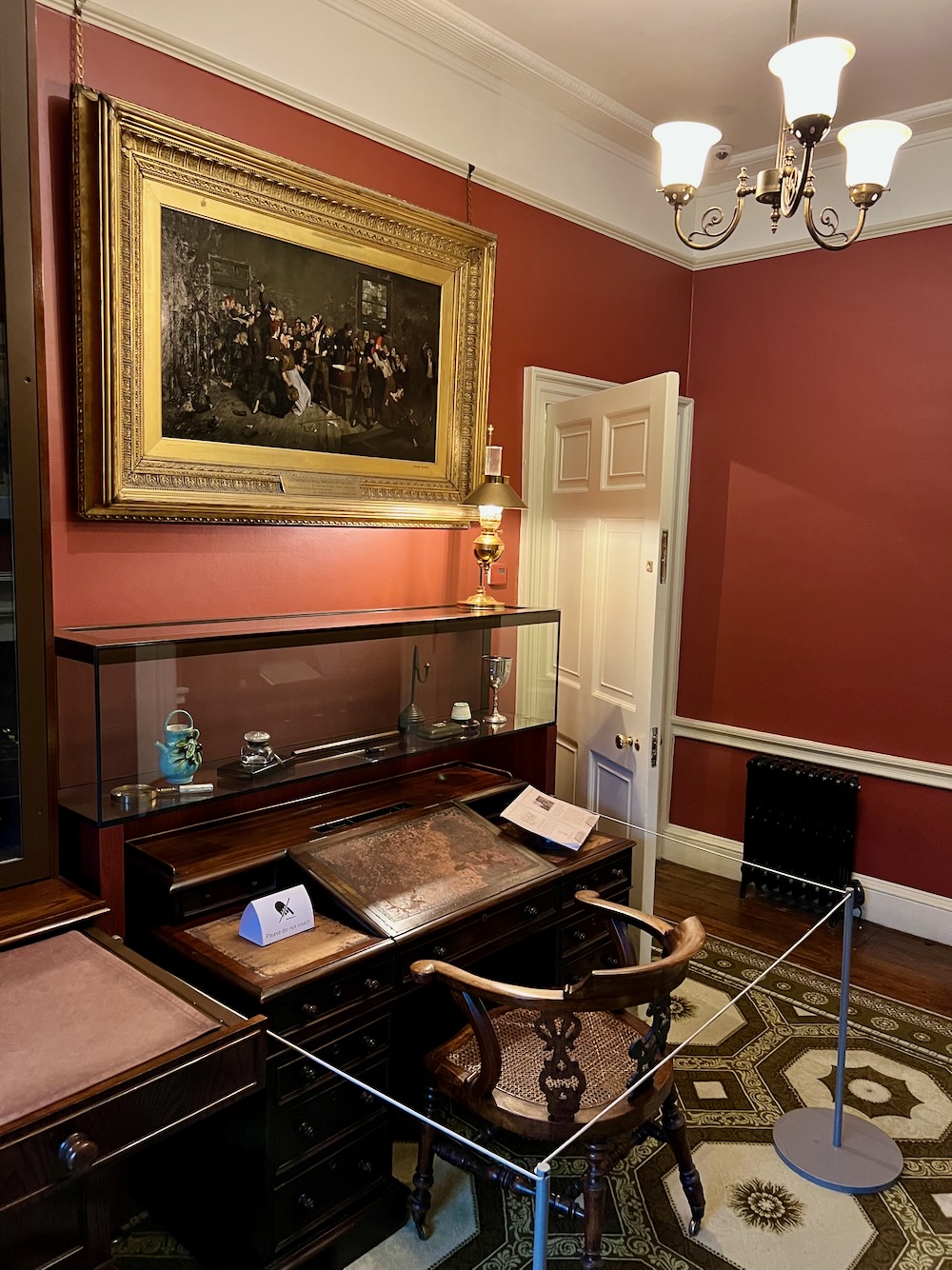 Charles Dickens desk at Charles Dickens Museum in London. Photo Credit: © Ursula Petula Barzey.
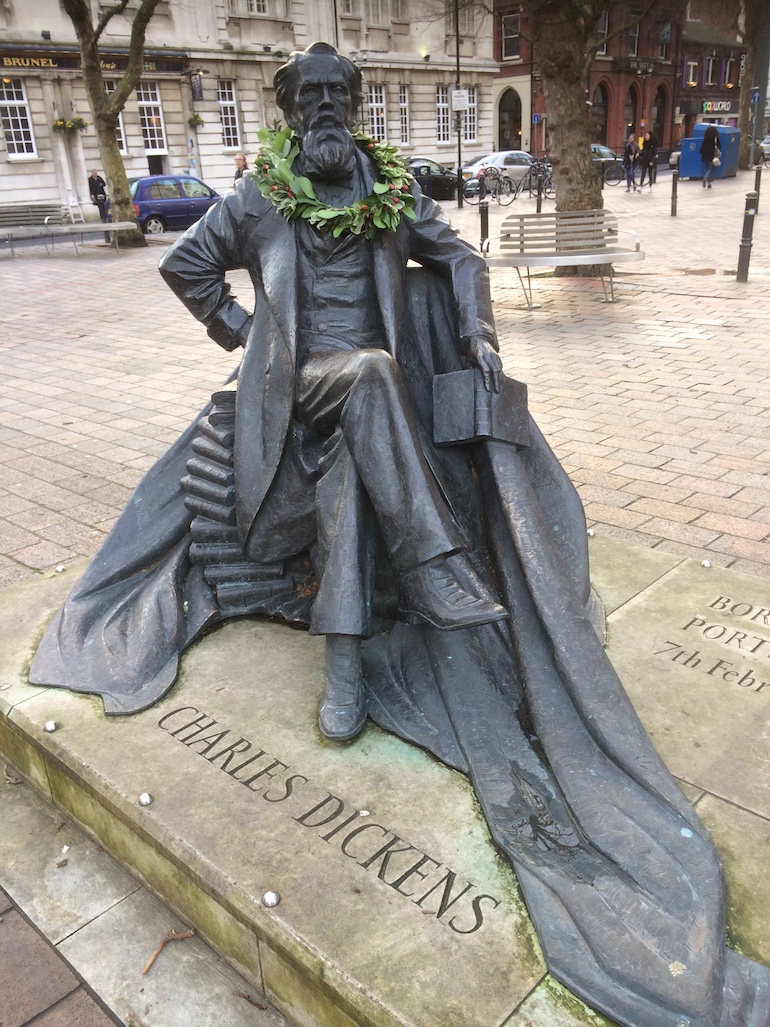 Charles Dickens Statue Portsmouth. Photo Credit: © Edwin Lerner.



Leave a Reply