


People are taking more photographs today than ever before, but as they increasingly rely on smartphones, the traditional camera is disappearing from sight. The Camera Exposed exhibition at the Victoria & Albert Museum in London is currently showcasing works by over 57 known artists as well as many unidentified amateur photographers. From formal portraits to casual snapshots, and from still-lifes to cityscapes, each work will feature at least one camera.
Portraits of photographers such as Bill Brandt, Paul Strand and Weegee, posed with their cameras, will be on display alongside self-portraits by Eve Arnold, Lee Friedlander and André Kertész, in which the camera appears as a reflection or a shadow. Other works depict cameras without their operators. In the earliest photograph included in the display, from 1853, Charles Thurston Thompson captures himself and his camera reflected in a Venetian mirror. The most recent works are a pair of 2014 photomontages by Simon Moretti, created by placing fragments of images on a scanner. The Camera Exposed exhibition at the Victoria & Albert Museum in London which can be toured with a qualified and knowledgeable Blue Badge Tourist Guide is on until 5 March 2017 in gallery 38a.
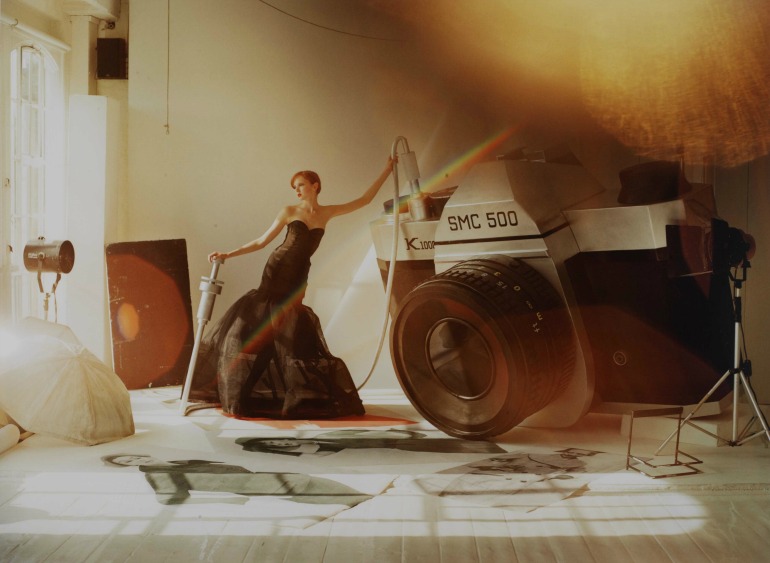 Victoria & Albert Museum: Cole with Giant Camera. Photo Credit: ©Tim Walker, 2004.


Leave a Reply