

Tina Engstrom

Kew Garden News: New Waterlily Species Found

A new waterlily species has been found on a plant-hunting expedition in a remote spot in Kimberley, Western Australia. As plant-hunter Carlos Magdalena investigated the waterlily, it became clear this was not the first time the species has been encountered by Kew Garden experts. 

An identical plant had previously been collected in the Northern territories and then grown at Kew Gardens in London. It was thought the lily grown at Kew Gardens must be a hybrid – a cross between two different plant varieties. However, the discovery in Kimberley was thousands of kilometres from the location where the original lily was found, and there were no examples of the suspected parent plants in the surrounding area. It was then that Carlos realised it was indeed a well-defined and separate species. Once this discovery has been backed up with DNA analysis, the next step will be to officially name the waterlily.
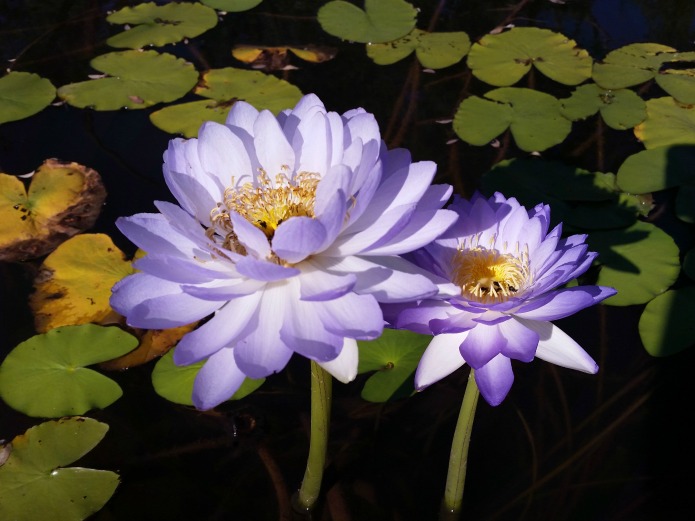
Kew Gardens - Waterlily

Photo: © Carlos Magdalena, RBG Kew.
Leave a Reply

Your email address will not be published. Required fields are marked *

You may also like

Frank Auerbach Exhibition at Tate Britain

Tate Britain has launched an exhibition featuring Frank Auerbach (b 1931, Berlin), a British artist who has made some of the most vibrant, alive and inventive paintings of recent times. Often compared to Francis Bacon and Lucian Freud in terms of the revolutionary and powerful nature of his work, his depictions of people and the urban landscapes near his London studio show him to be one of the greatest painters alive today.

Read more

Albrecht Durer Exhibition at the National Gallery in London

A blockbuster exhibition at the National Gallery traces the travels of Albrecht Dürer (1471-1528), the ‘Apelles of the black line’ as Erasmus called him. These journeys were principally to cities along the Rhine (1490-4), twice to Venice (1505-7), and the Netherlands (1520-21). No other artist has produced a comparable body of work from the experience of travel. Like the landmark self-portrait of 1500, which evokes Christ (above) Durer’s art signals a self-awareness that crosses frontiers.

Read more