



A robot has taken up residence at the Victoria & Albert Museum in London. The robot – which resembles something from a car assembly line – will build new sections of the Elytra Filament Pavilion over the coming months. The futuristic structure will grow and change shape using data based on how visitors interact with it. Its unveiling on 18 May 2016 marked the launch of the Victoria & Albert’s Museum Engineering Season.
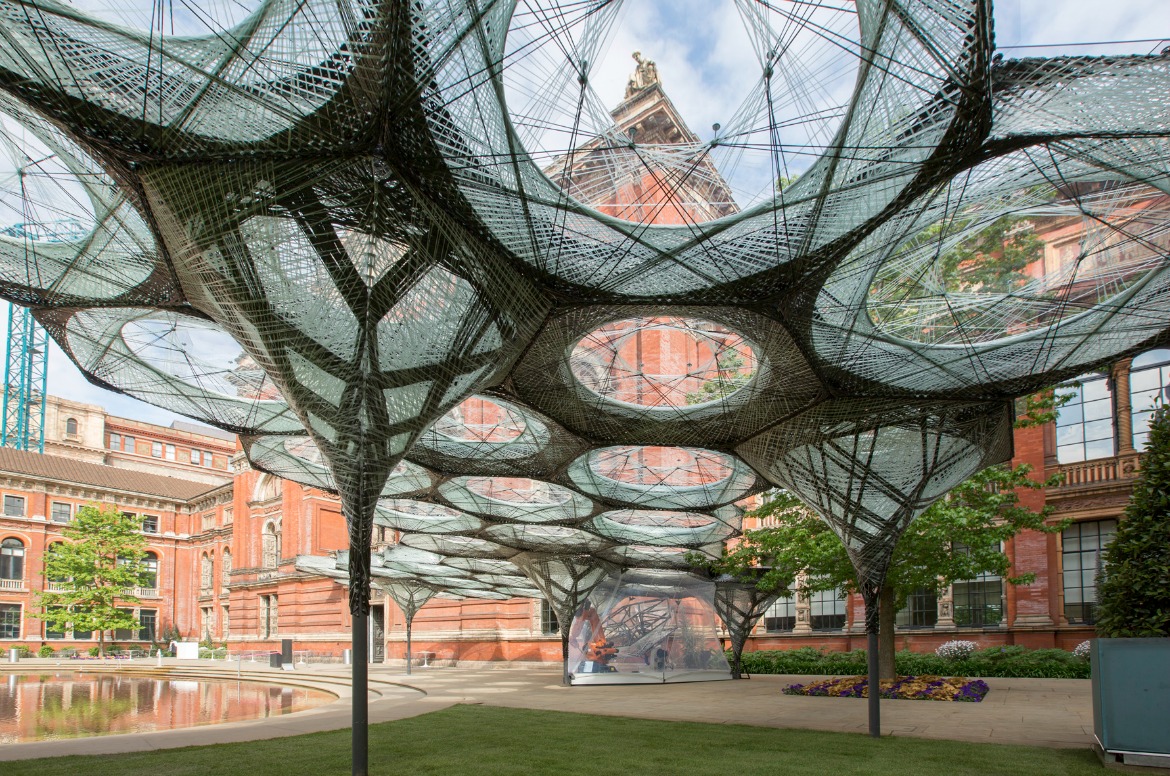 Victoria & Albert Museum – Elytra Filament Pavilion. Photo Credit: ©Victoria & Albert Museum, London.
The Elytra Filament Pavilion canopy is made up of 40 hexagonal cells made from strips of carbon and glass fibre which have been tightly wound into shape by the computer-controlled Kuka robot. Each cell takes about 3 hours to build and on certain days visitors to the Victoria & Albert Museum will be able to watch the robot create new cells that will be added to the canopy. The structure is remarkably lightweight. Each cell weighs 45kg and has a predicted lifespan of 50 years. The Elytra Filament Pavilion will be at the Victoria & Albert Museum in London until 6 November 2016.




Leave a Reply