
Karen Sharpe

Bethlem Museum Of The Mind Opens

The Bethlem Royal Hospital better known as Bedlam was set up in 1247 as Europe’s first centre dedicated to the treatment of psychiatric illness.   It has moved between various locations in London – including at the building that is now the Imperial War Museum.

In 1930 the facility moved to a location between Croydon and Beckenham, and now part of this hospital has opened as The Museum of the Mind, displaying a collection of historic and modern art and artefacts. The entrance to the collection is a staircase flanked by two statues representing raving and melancholy madness – one looking calm, the other in manacles screaming.

Included in the exhibition are examples of how phrenology (contours of the skull) and physiognomy (facial features) were used to diagnose personality types. As well as more recent examples of psychiatric care including videos and voice-overs exploring how mental healthcare is treated today. Entrance is free and it is open Wednesdays –Fridays and the first and last Saturday of every month. 
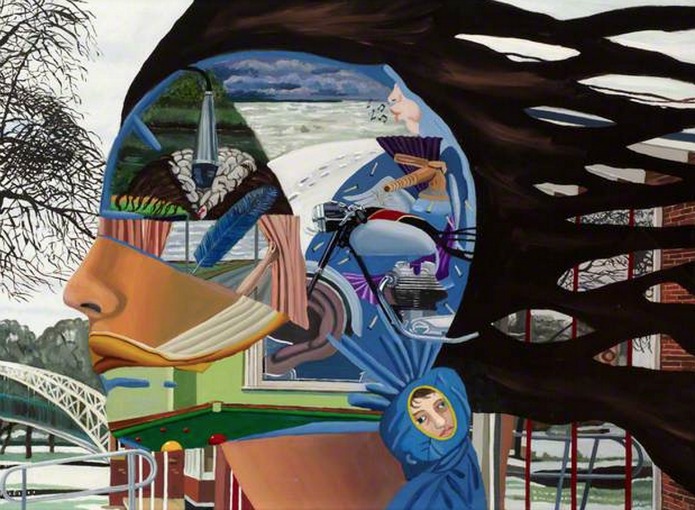
Broach Schizophrene by Bryan Charnley

Broach Schizophrene by Bryan Charnley. Photo: © Bethlem Museum of the Mind.
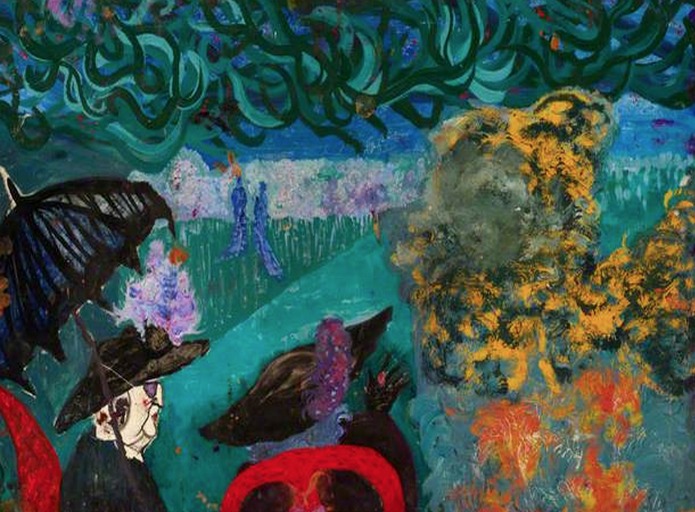
Old Women in a Garden by Stanley Lench

Old Women in a Garden by Stanley Lench. Photo: © Bethlem Museum of the Mind.

Karen Sharpe

I was born in London and have lived there for most of my life although I have now ‘decamped’ to what is known as the suburbs.
I have worked for an antiques removal/shipping company before joining the Metropolitan Police Force where I enjoyed a varied career for 14years. Since leaving I followed up…

Leave a Reply

Your email address will not be published. Required fields are marked *

You may also like

John Singer Sargent Exhibition at National Portrait Gallery

John Singer Sargent (1856-1925) was the greatest portrait painter of his generation. Acclaimed on both sides of the Atlantic, he was closely connected to many of the other leading artists, writers, actors and musicians of the time. His portraits of these friends and contemporaries, including Auguste Rodin, Claude Monet and Robert Louis Stevenson, were rarely commissioned and allowed him to create more intimate and experimental works than was possible in his formal portraiture.

Read more

Building a Future, Facing a Past: The British Museum's Expansion Plans

The British Museum is one of the world’s great museums but has a very inappropriate name. Many of the treasures on display were acquired – sometimes by fair means, sometimes by foul – over the centuries when Britain was a great imperial power and most people thought little of the morality of taking treasures from countries that had been colonised as part of the British empire and displaying them in central London in a building designed by Sir Robert Smirke and his brother Sidney. Many of these countries now want their treasures back and are growing increasingly strident in demands for their return.

Read more