

Tina Engstrom

Did Dinosaurs Have Feathers or Not?

It is too soon to claim that the common ancestor of dinosaurs had feathers, according to research by scientists at the Natural History Museum, Royal Ontario Museum and Uppsala University. 

A new study, published in the journal Biology Letters recently, suggests that feathers were less prevalent among dinosaurs than previously believed. Scientists examined the fossil record of dinosaur skin and combined this with an evolutionary tree to assess the probability of feathers appearing in different dinosaur groups. This analysis demonstrated that the majority of non-avian dinosaurs were more likely to have scales than to exhibit signs of ‘feather-like’ structures. The controversial findings will add further fuel to a fierce debate among scientists as to whether the majority of dinosaurs were feathered or scaly.
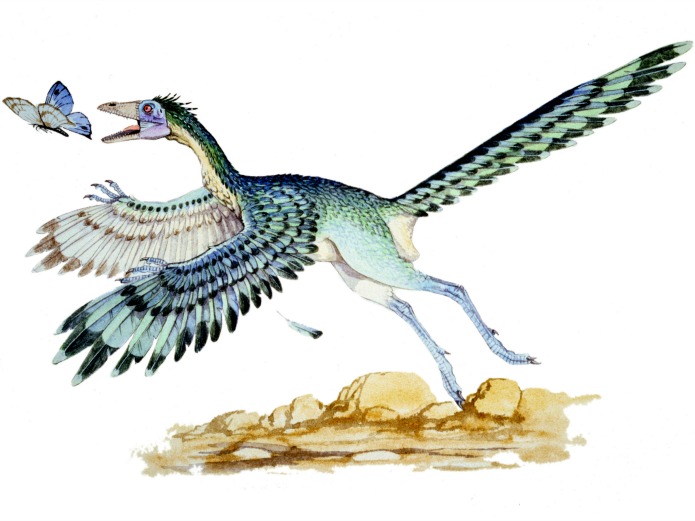
Natural History Museum - Dino Skin

Dinobirds. © Natural History Museum.

Leave a Reply

Your email address will not be published. Required fields are marked *

You may also like

At Home With Jimi Hendrix - Exploring The London Lodgings Of A Rock And Roll Icon

Fifty years ago this month, we lost one of the greatest musicians of all time. Jimi Hendrix died in Notting Hill, on 18 September 1970. Johnny Allen Hendrix was born on 27 November 1942 in Seattle. He became “Jimi” only later. He had a diverse lineage with African-American and Native American roots. His grandmother Nora was said to be one-quarter Cherokee. Early 20th-century photos reveal her fine features, which bear a striking resemblance to those of her grandson.

Read more

A Dickens Of A Christmas in London

More than anyone else, Charles Dickens invented the British Christmas with A Christmas Carol, his story about Ebenezer Scrooge and the ghosts of Christmas Past, Present, and Future. It was first published in 1843 and has been adapted for stage and screen many times. No surprise then that there are four museums in the United Kingdom dedicated to Charles Dickens (including one in London), more than any other British writer.

Read more