



Her Majesty Queen Elizabeth II is the most travelled sovereign in British history, undertaking more than 250 overseas visits during her 65-year reign. During 2016 alone, The Queen carried out over 300 official engagements the length and breadth of the United Kingdom. An important part of these occasions is the receiving or exchanging of gifts, the subject of the an exhibition at this year’s Summer Opening of the State Rooms at Buckingham Palace.
Displayed throughout the magnificent State Rooms, more than 250 objects from 100 countries and territories will explore Her Majesty’s role as Head of State, Head of the Commonwealth and Head of Nation. The exhibition will include gifts given during State Visits, overseas tours and official engagements and those presented to mark significant moments in The Queen’s life.
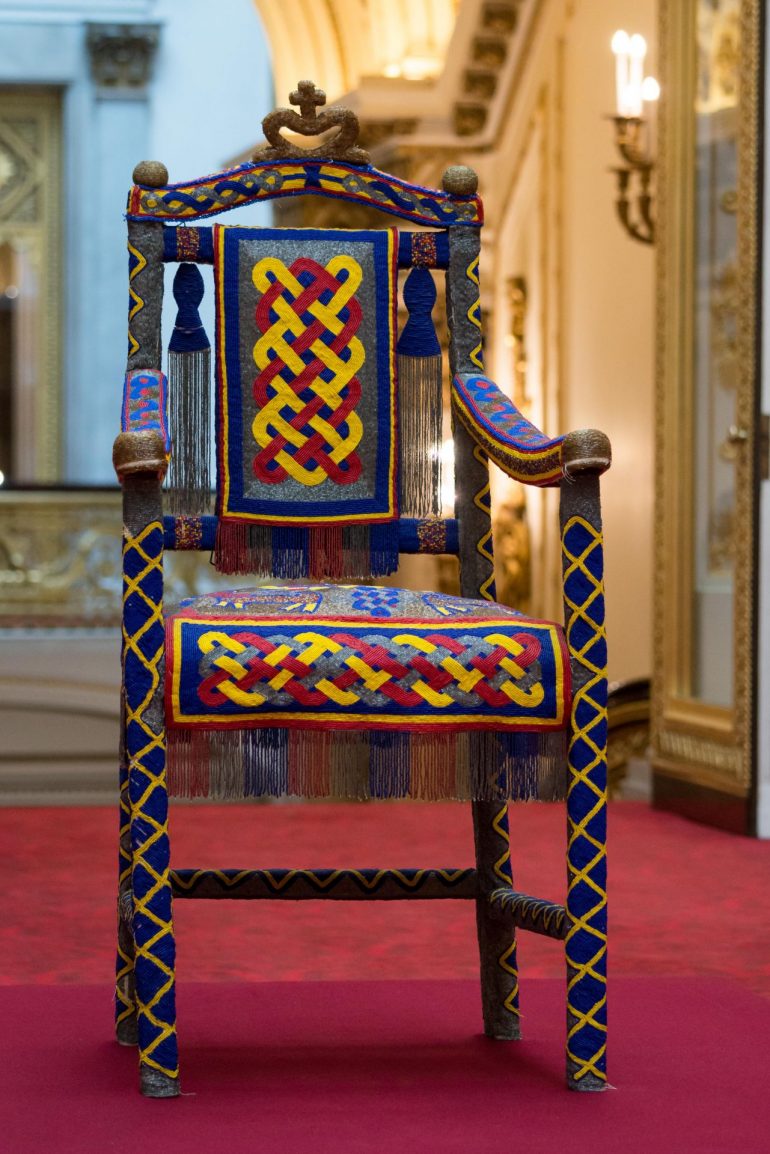 Buckingham Palace: 2017 Summer Opening of the State Rooms Royal Gifts Exhibition: A beaded Yoruba throne presented to The Queen by the people of Nigeria in 1956. Photo Credit: Royal Collection Trust / © Her Majesty Queen Elizabeth II 2017.
During a State Visit, whether incoming or outgoing, it is customary for gifts to be exchanged as a symbol of goodwill. Official gifts are often examples of local craftsmanship and artistic traditions, such as the colourful beaded Yoruba throne presented to The Queen by the people of Nigeria in 1956. Beadwork and royalty are closely associated in Yoruba culture, and large quantities of beads are considered a sign of wealth and status. The interlaced motifs on the throne hold spiritual meaning, including respect for ancestors.
Gifts received from around the world to mark significant occasions in Her Majesty’s life, such as birthdays and Jubilees, often make reference to the historical or personal relationship between the monarch and the nation.
In 2016, to celebrate The Queen’s 90th birthday, Salt Island, one of the British Virgin Islands, presented Her Majesty with a linen bag containing salt. This gift reflected the tradition, reintroduced in 2015, of the Island paying the monarch an annual rent of a pound of salt on their birthday.
Royal Gifts is part of a visit to the Summer Opening of the State Rooms at Buckingham Palace, 22 July –
1 October 2017.


Leave a Reply