


For many visitors to London, one of the iconic sights of a trip to the capital is a traditional London red double-decker bus. Known as a Routemaster, this bus was designed in the late 1940s and manufactured until 1968 when production stopped, mainly because their open back doors – which were one of the attractions for many Londoners – made them unusable by those in a wheelchair. They were still used on many routes until the early twenty-first century and some can be seen occasionally on routes such as the Routemaster Heritage Route 15 which runs from Blackwell to Trafalgar Square.
You do not see them often on regular Transport for London (TFL) routes these days but you can hire an old Routemaster for around £600 to £1000 for a private tour. The price will vary depending on the length of the tour and will include the services of a driver and a conductor, who may be dressed in an old London Transport uniform. If you want to hire a Blue Badge Tourist Guide to introduce you to the sights of London, you will have to pay extra for their services. TFL is responsible for London’s public transport system and still owns over one hundred Routemaster buses.
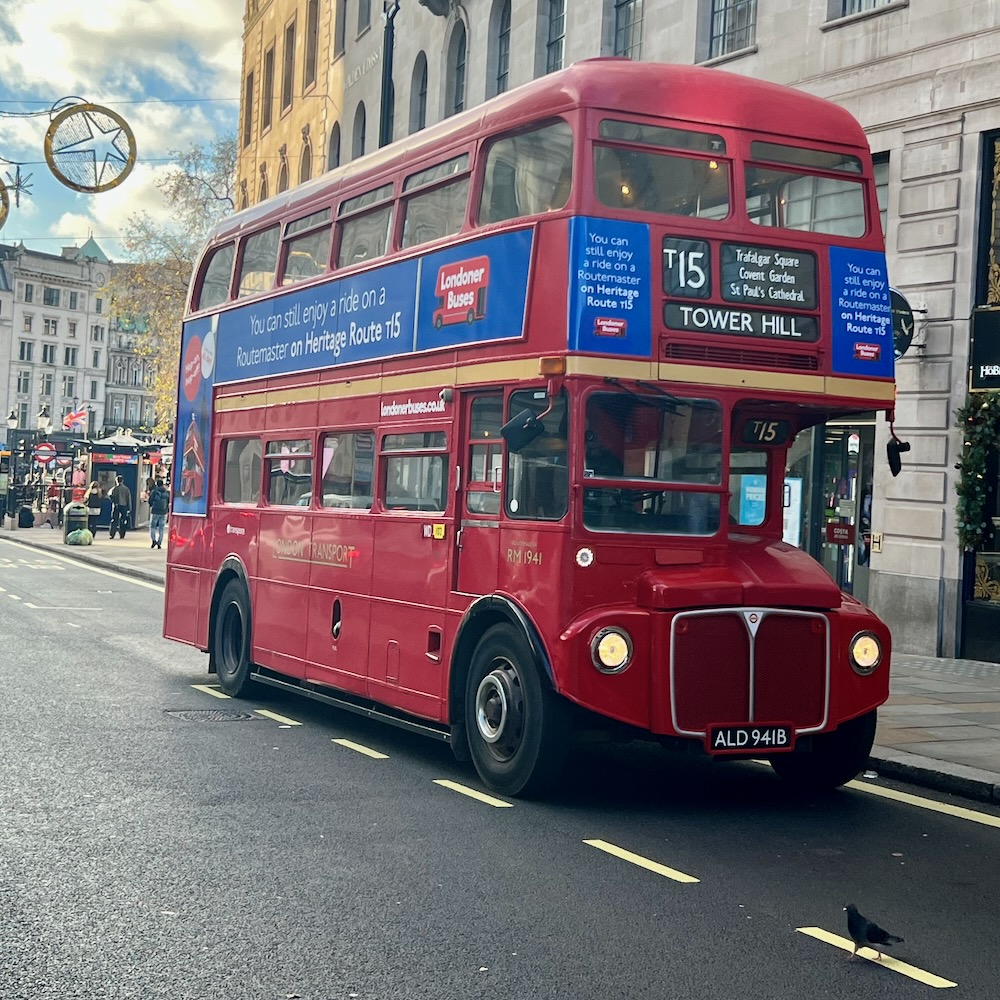 Classic Routemaster Double Becker Bus. Photo Credit: © Ursula Petula Barzey.[/caption]
The Routemaster was designed in the late 1940s and 3000 were built between 1954 and 1968, when production stopped. Routemasters were built to last, however, and remained in service on several routes and were still in use in 2005 when they were gradually withdrawn and replaced by the new Routemaster designed by the distinguished architect Thomas Heatherwick. These are enclosed buses which are more wheelchair friendly but it seems unlikely that the new Routemaster will still be in use in half a century from now. Many old Routemasters are around sixty years old and still going strong, their design having outlived many of those which were introduced to succeed it.
Many Routemasters have been sold to private companies for the surprisingly low price of £2000 to £4000 and they are hired out from commercial companies for groups who want to see London from a traditional mode of transport. They can be adapted for guided tours with audio systems and most blue badge guides will have conducted a tour on a traditional Routemaster at some stage. Several companies have Routemaster buses available for hire.
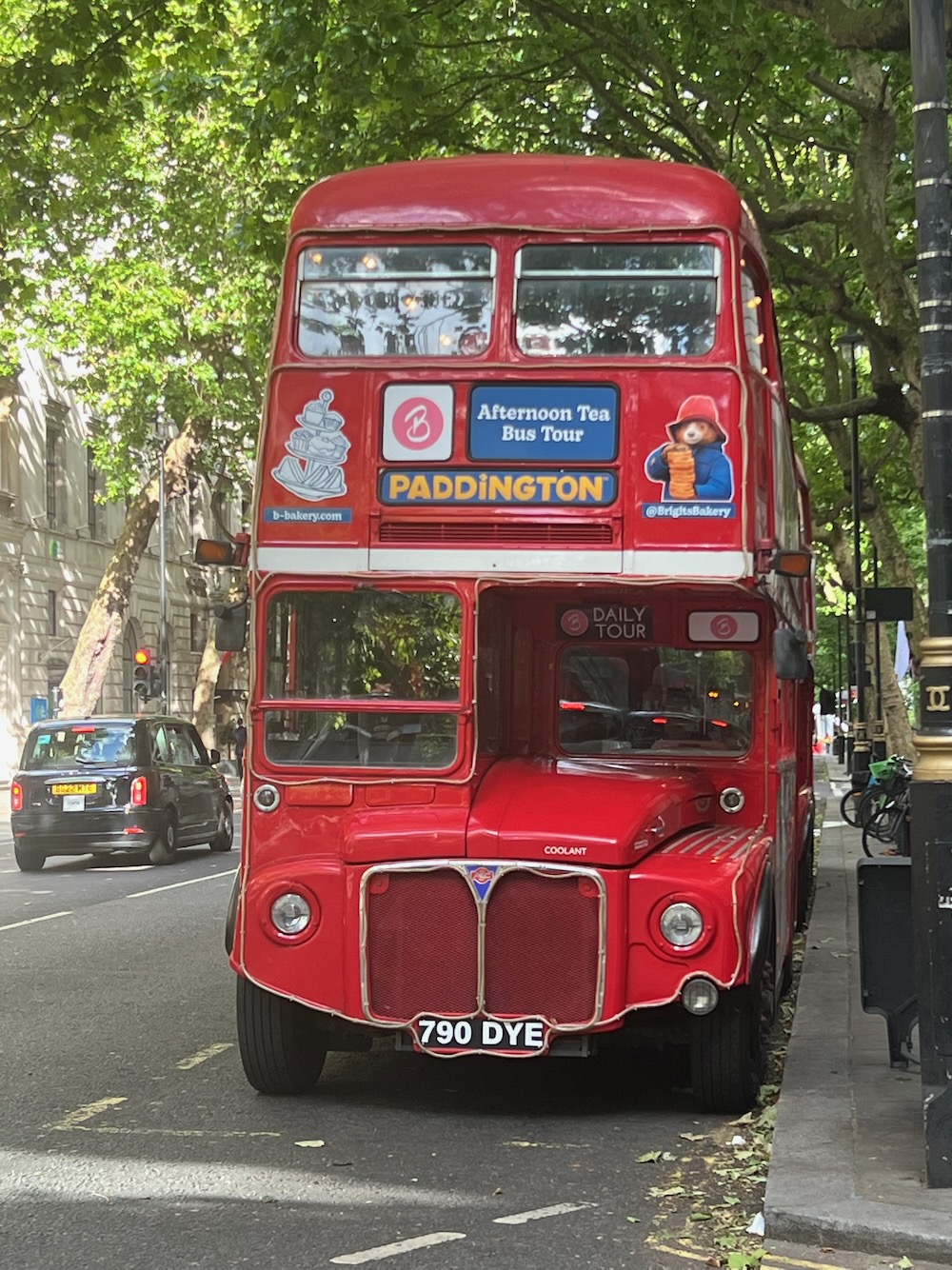 Classic Routemaster being used for Afternoon Tea Tour. Photo Credit: © Ursula Petula Barzey.
The film industry has also used old London buses on several occasions. Cliff Richard and his friends used one in the sixties film Summer Holiday. (Three buses were actually used in the filming.) These are sometimes called Routemasters but, in fact, they are seen travelling in the predecessor of a Routemaster, the Regent III AEC. This is also the bus used by Roger Moore in his first portrayal of James Bond in the film Live and Let Die. He actually ‘decapitates’ the bus in a chase scene with some police cars. (Do not try this at home.) This has helped to cement the idea of a Routemaster – or one of its predecessors – as the iconic bus of London for many visitors to the capital.
Every year the ‘lost’ village of Imber on the Salisbury Plain hosts a meeting of old-fashioned buses in a special festival in August. (In 2024 it will be on Saturday 17th August. Go to imberbus.org for more.)
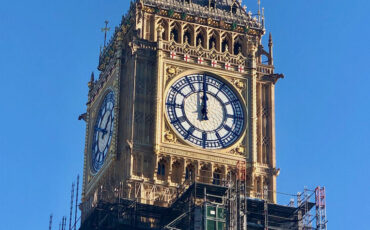
You can also have afternoon tea – another old custom followed by many Britons – on a Routemaster bus while seeing the famous sights of the city such as Big Ben. (Go to b-baker.com for details.) You can even hire a Routemaster for your wedding if you want to make your big day one to remember.
Thanks to Tim Barron, former bus conductor and London guide, for the information in this post.


Leave a Reply