

Blog
Blog Posts
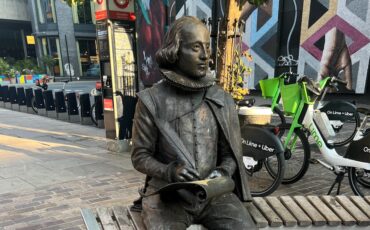
William Shakespeare – A London Eastender
It is not known to many people, but William Shakespeare began his theatrical career in the East End of London rather the place most often associated with him – Southwark, the area to the south of London Bridge. Sam Wannamaker, the American actor and director, felt that Shakespeare deserved a monument in London, the city where he made his fame and fortune. Wannamaker decided to rebuild the Globe Theatre in Southwark near the Tate Modern Museum and raised the money from donors to do so.
Read more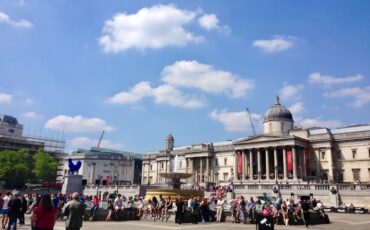
Fourth Plinth In Trafalgar Square – Filling The Most Famous Empty Space In London
Blue Badge Tourist Guides on a tour of London will probably go through Trafalgar Square in the centre of the city. One of its most striking features is the sculpture on display on the northwest side of the Square. Known simply as ‘The Fourth Plinth,’ it remained empty until 1999. It was consistently rumoured that a statue of the late Queen Elizabeth II was planned for this space but she had a very long life and died at the age of 96 in 2022.
Read more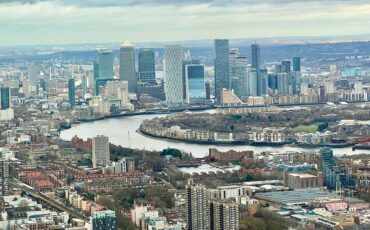
London’s Tallest Buildings: A Journey Through the City’s Iconic Skyline
London was built on clay so it was harder to build high than in New York, which stands on rock. For many years the tallest architects could construct a skyscraper was 5 – 600 feet. Then new technology allowed them to build higher and London’s tallest building is currently The Shard next to London Bridge, which is over 1000 feet tall. One Undershaft in The City was built to match The Shard in height and it too will have a viewing tower with an education centre operated by the recently renamed London Museum (formerly Museum of London).
Read more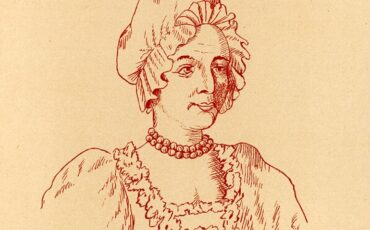
Theresa Cornelys and London’s First Night Club
Also known as Mme de Trenti or Mrs. Smith (1723-1797), Theresa Cornelys was an opera singer, visionary artist, courtesan and mistress of ceremonies who captivated wealthy English society for nearly twenty years. Her scandalous life, both private and public, was a popular topic among European aristocratic circles.
Read more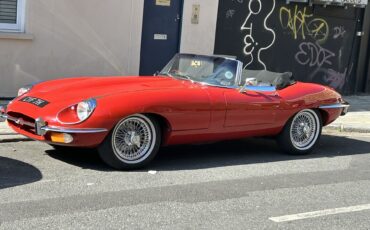
British Luxury Cars: Rolls Royce, Bentley, Jaguar and Aston Martin
Great Britain may not have a booming car industry these days but it still owns many of the great names of world motoring. These include Rolls Royce, Bentley and Jaguar as well as Aston Martin, made famous as the car of the secret agent James Bond, another British icon.
Read more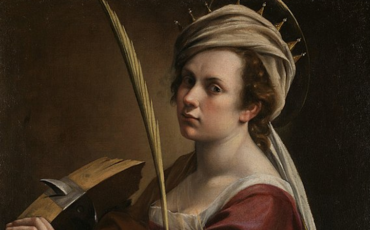
Happy 200th Birthday to The National Gallery in London
The main impetus for the founding of The National Gallery was the purchase, by the British government, of thirty-eight paintings – including masterpieces by Rembrandt, Rubens and Titian – from the collection of John Julius Angerstein, a successful banker and marine insurance broker born in St Petersburg to German parents. When the gallery first opened to the public, in May 1824, it was housed in Angerstein’s former home at 100, Pall Mall.
Read more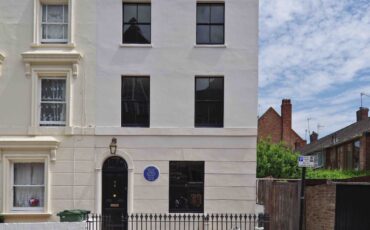
From Humble Abode to Creative Hub: Van Gogh House London Reinvents Itself
Did you know that Vincent Van Gogh lived in London before he became an artist and that the house in which he lived is open to the public? Van Gogh’s House is a non-profit contemporary arts organisation based in the South London boarding house where the young Vincent lived in 1873-74.
Read more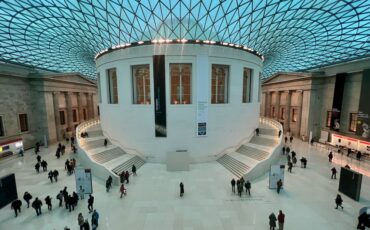
Building a Future, Facing a Past: The British Museum’s Expansion Plans
The British Museum is one of the world’s great museums but has a very inappropriate name. Many of the treasures on display were acquired – sometimes by fair means, sometimes by foul – over the centuries when Britain was a great imperial power and most people thought little of the morality of taking treasures from countries that had been colonised as part of the British empire and displaying them in central London in a building designed by Sir Robert Smirke and his brother Sidney. Many of these countries now want their treasures back and are growing increasingly strident in demands for their return.
Read more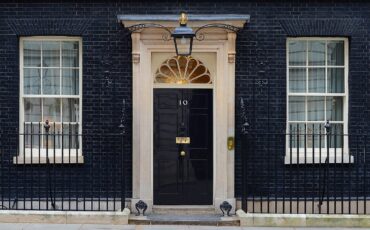
Unveiling the Mysteries of UK General Elections
Unlike in the United States, where the Constitution was written down by the Founding Fathers nearly 250 years ago and is regarded as sacrosanct by many Americans, the British Constitution has never been formally inscribed but instead has evolved over centuries. The Supreme Court in Parliament Square can only decide if the government has acted within the law as it stands and cannot decide what that law should be. The Court does not have the power to overrule the politicians who sit in the Palace of Westminster opposite. Parliament always has the ultimate authority under the British system.
Read more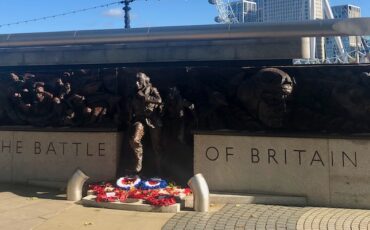
Five Top Battle of Britain Sites to Visit in London
This summer marks 80 years since the Battle of Britain was fought in the skies over southern England. This was a fight for Britain’s survival against a Nazi Germany that had conquered much of western Europe in just a few short months. With the fall of France in June, Britain expected a German invasion, and one was indeed being planned under the codename Operation Sealion. However, for the invasion to be successful the Germans first needed to control the skies over Britain – they needed to destroy the Royal Air Force.
Read more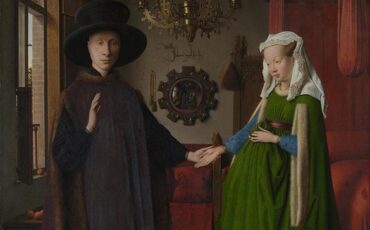
10 Things That May Surprise You About Works of Art at The National Gallery, London
In 1824 the House of Commons agreed to pay £57,000 for the art collection of the wealthy banker John Julius Angerstein. His 38 pictures became the core of a new national collection. Great encouragement came from another collector, Sir George Beaumont, who donated 16 paintings to the new gallery and in 1838 the National Gallery in Trafalgar Square finally opened its doors.
Read more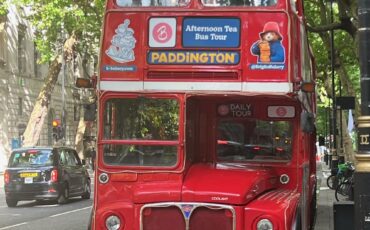
The Classic Routemaster Double-Decker Bus: History & Fun Facts
For many visitors to London, one of the iconic sights of a trip to the capital is a traditional London red double-decker bus. Known as a Routemaster, these buses was designed in the late 1940s and manufactured until 1968 when production stopped, mainly because their open back doors – which were one of the attractions for many Londoners – made them unusable by those in a wheelchair. They were still used on many routes until the early twenty-first century and some can be seen occasionally on routes such as the Routemaster Heritage Route 15 which runs from Blackwell to Trafalgar Square.
Read moreSherlock Holmes London Tour

Elementary my dear visitor – the London of Sherlock Holmes
A Sherlock Holmes London Tour is unmissable because…
The best way to explore Sherlock Holmes’ London…