
Tina Engstrom

The Bejewelled Treasures Exhibition at Victoria & Albert Museum

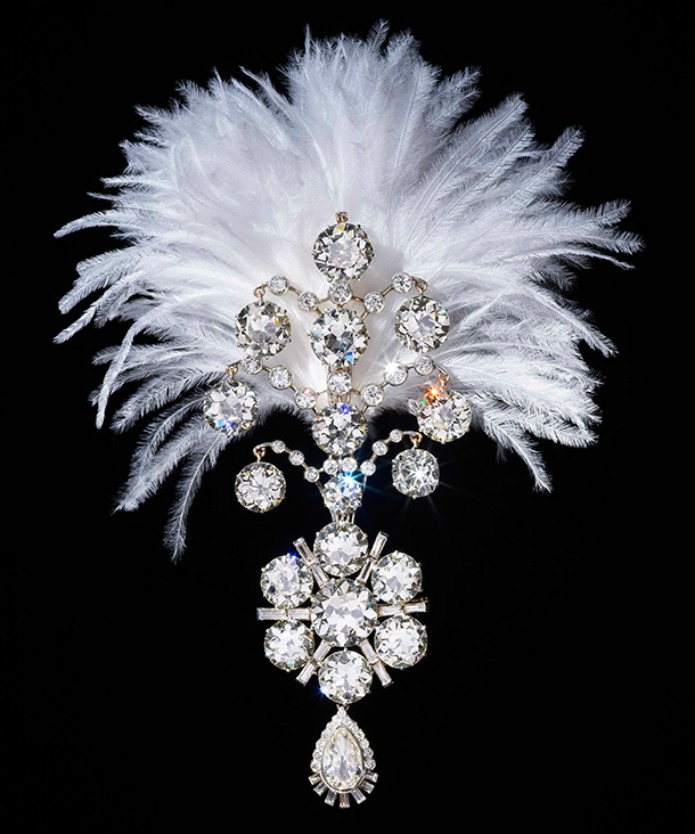
The Victoria & Albert Museum will launch The Bejewelled Treasures: The Al Thani Collection exhibition on 21 November 2015.  Spectacular objects, drawn from a single private collection, will explore the broad themes of tradition and modernity in Indian jewellery. 

Highlights will include Mughal jades, a rare jewelled gold finial from the throne of Tipu Sultan, and pieces that reveal the dramatic changes that took place in Indian jewellery design during the early 20th century. The exhibition will examine the influence that India had on avant-garde European jewellery made by Cartier and other leading houses and will conclude with contemporary pieces made by JAR and Bhagat, which are inspired by a creative fusion of Mughal motifs and Art Deco ‘Indian’ designs.  The Bejewelled Treasures: The Al Thani Collection exhibition at the Victoria & Albert Museum is on 21 November 2015 – 28 March 2016. 
Victoria & Albert Museum - Bejewelled Exhibition

Diamond turban jewel made for the Maharaja of Nawanagar 1907; remodelled in 1935. Photo: The Al Thani Collection © Servette Overseas Limited, 2014.



Leave a Reply

Your email address will not be published. Required fields are marked *

You may also like

Turner Exhibition at Petworth House & Tate Britian

Joseph Mallord William Turner was not the most sociable of men but he found a true friend in George O'Brien, Third Earl of Egremont and owner of Petworth House in Sussex. The Earl was a sociable and generous aristocrat with a love of art, a large house and an open purse. Every year he had a party in the grounds of Petworth for the local community on his birthday and, when 6000 people turned up one time, he made sure they were all welcomed, fed and watered.

Read more

The Rosetta Stone at London's British Museum – Uncovering the Secrets of Ancient Egypt

One of the most popular items in the British Museum in London is the Rosetta Stone. It is rather unremarkable. It is the height of a child, cracked at the edges, lacking colour, and with inscriptions on only one side. There is little beauty in it, and the inscriptions are boring decrees - yet it is maybe one of the most famous stones in the world. For over 20 years it became the focus of a race to crack a code of strange pictures and shapes and in doing so uncover the life of Ancient Egypt.

Read more