



From a basement in New York, Joseph Cornell channelled his limitless imagination into some of the most original art of the 20th century. Cornell hardly ventured beyond New York State, yet the notion of travel was central to his art. His imaginary voyages began as he searched Manhattan’s antique bookshops and dime stores, collecting a vast archive of paper ephemera and small objects to make his signature glass-fronted ‘shadow boxes’.
These miniature masterpieces transform everyday objects into spellbinding treasures. Together they reveal his fascination with subjects from astronomy and cinema to literature and ornithology and especially his love of European culture, from the Romantic ballet to Renaissance Italy. Wanderlust brings together 80 of Cornell’s most remarkable boxes, assemblages, collages and films, some never before seen outside the USA. Wanderlust is a long overdue celebration of an incomparable artist, a man the New York Times called “a poet of light; an architect of memory-fractured rooms and a connoisseur of stars, celestial and otherwise.” The Joseph Cornell – Wanderlust exhibition is on at the Royal Academy of Arts from 4 July to 27 September 2015.
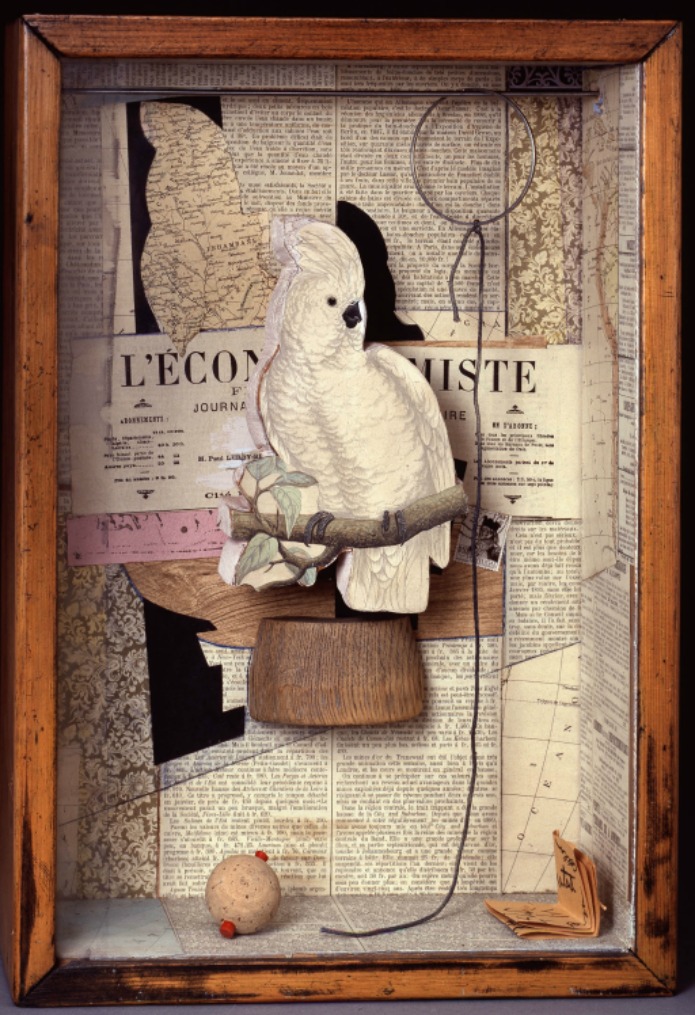
A parrot for Juan Gris, 1953-54. Photo: Courtesy of Aimee and Robert Lehrman, © The Joseph and Robert Cornell Memorial Foundation/VAGA.


Leave a Reply