



The Coral Reefs: Secret Cities of the Sea exhibition at the Natural History Museum in London explores the richness of life beneath the waves and the importance of these delicate ecosystems and includes more than 200 specimens spanning corals, fish and fossils, a live coral reef and a virtual dive through stunning imagery from the Catlin Seaview Survey.
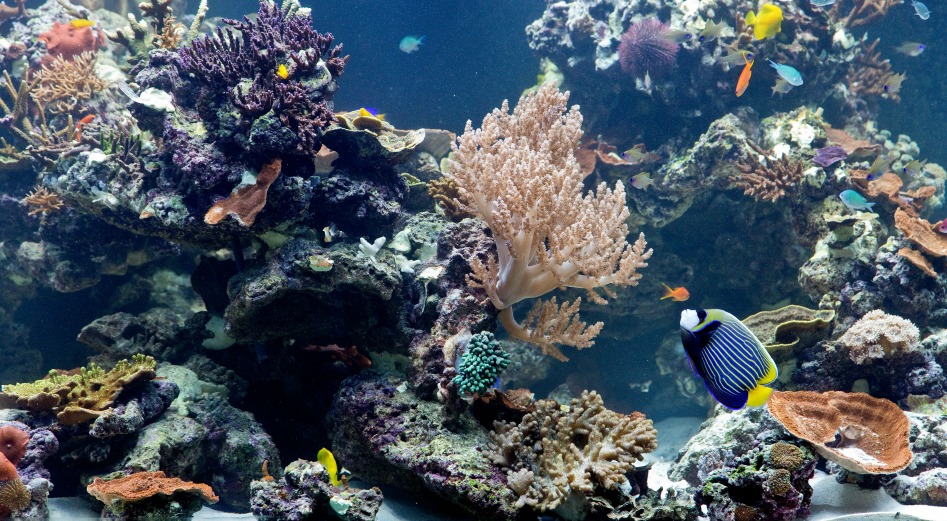
Coral reef exhibition. Photo: ©Natural History Museum, London.
Coral reefs are found in shallow waters in the tropics and are home to almost a quarter of all living species in the sea. While they only make up around 0.1% of Earth’s surface, more than 500 million people depend on coral reefs for their livelihood. The benefits they provide, such as fishing, tourism and protection from storms, are estimated to be worth more than £200 billion each year.
Although corals can look rock-like, they are actually colonies of tiny animals related to jellyfish, with limestone skeletons. Corals grow incredibly slowly, sometimes as little as one or two millimetres a year. They are highly sensitive to changes in the ocean, such as temperature, pollution and acidity. Coral reefs and the enormous variety of life they host can act as early warning signals, alerting us to changing conditions in the oceans. The Coral Reefs: Secret Cities of the Sea exhibition at the Natural History Museum in London is on from 27 March to 13 September 2015.





Leave a Reply