



There’s a Turkish saying that one disaster is better than 1,000 pieces of advice. Whatever myths created about it in the last 100 years, Gallipoli was a disaster. The Turks won. Gallipoli was the British Empire and France trying to knock Germany’s ally Turkey out of World War One, thereby reducing the pressure on the Allies’ eastern front. As the historians say, “Gallipoli was launched almost casually, into a void, and was doomed to fail.”
There was little planning and the troops used were inexperienced. Part of the soldiers’ training was ‘how to recognize when a Turkish soldier surrenders.’ The initial assault was timed to take place between the setting of the brilliant moon at 2.56am and the arrival of sunrise – i.e. a window of just one and a half hours to get thousands ashore, but it took a full 40 minutes just to get the heavily laden soldiers into the rowboats. The Allies thought they would be facing heavy odds, and the first troops ashore reported encountering ferocious gunfire, but often the gunfire was Allied. The sparse numbers of Turkish defenders had to hold out for 24 hours before reinforcements could arrive. And although the Aussies and Kiwis remember Gallipoli with a special reverence, we shouldn’t forget that of the half a million British Empire forces involved, the vast majority were British/Irish with significant contributions from the Indian Army, and the Gurkhas who in one deadly night attack drove the Turkish frontline back 500 yards. Nor should we overlook the 79,000 French.
Yet the significance for the ANZACs is undeniable. The eight months of brutal fighting gave the ANZAC forces a powerful sense of comradeship, a growing sense of military competence and ultimately their first real sense of nationhood. By the end of the Great War, the ‘colonials’ were appreciated as battle-hardened shock troops.
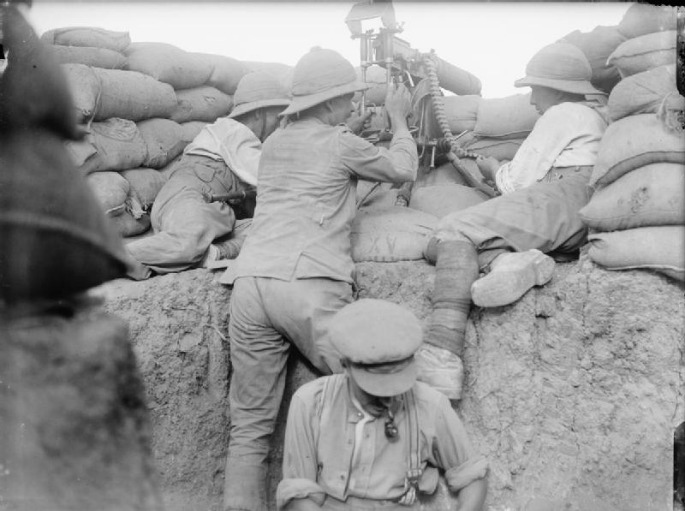
A British soldier fires a machine gun with periscope attachment in the trenches at Gallipoli. Photo: ©British Official photographer.
Without the lessons of Gallipoli there would have been no D-Day. D-Day saw two hundred thousand troops put ashore, in the right place, in the right formations, unlike Gallipoli, with immediate artillery support. Unlike Gallipoli D-Day quickly created a formidable beachhead with plenty of force to create an effective new Front. So yes, Gallipoli helped save the planet.
GALLIPOLI FACTS:
* Wearing of sprigs of rosemary is part of Gallipoli remembrance; rosemary is the traditional symbol of remembrance and grows wild on the Gallipoli cliffs.
* 8th August 1915 saw the bitterest Australian fighting at Gallipoli for the Lone Pine ridge with seven Aussie VCs being awarded. 8th August 1918 saw the Australians triumph on the western Front at the battle of Amiens.
* Kebabs originated as skewers of lamb barbecued on the bayonets of Turkish soldiers.
5 THINGS TO DO DURING GALLIPOLI 100
1. ATTEND the march-past at the Cenotaph at 11.00 Saturday 25th April.
2. SEE The Russell Crowe action melodrama The Water Diviner
3. WATCH The Gurkhas march down the Mall 30th April at 2.30
4. VISIT Imperial War Museum for their Gallipoli collection
5. JOIN a guided Gallipoli 100 walking tour – visiting the central London the war memorials. Led by Blue Badge tour guide (kiwi) Simon Rodway 25th April – meet 2.00 Green Park tube park-side exit. More more informaiton and to sign up, visit World War One Walks.
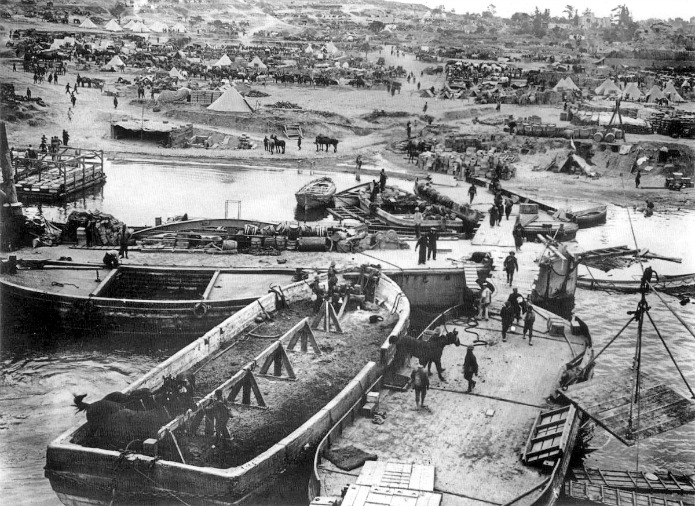
V Beach at Cape Helles, Gallipoli, 6 May 1915. View is from the bow of the collier SS River Clyde. Photo: ©British Official photographer.





Leave a Reply