
Tina Engstrom

The Peter Pan Cup in Hyde Park

Members of the Serpentine Swimming Club, one of the oldest swimming clubs in the country, will swim their traditional 100-yard (91-metre) Christmas Day race in the Serpentine.

The race takes place on the south bank of the lake, close to the Serpentine Café, at 9am. The water temperature is usually below 4C (40F) degrees in the winter, so swimmers must become acclimatised over a period of time.  Swimmers have met in London’s Hyde Park on Christmas morning since 1864 to compete in the Christmas Day swim. The first Christmas Day swimming race was won by H. Coulter, who was given a gold medal which became the customary prize for the winner. Novelist J.M. Barrie donated the first Peter Pan Cup in 1904, the same year that his play Peter Pan made its debut on the London stage.
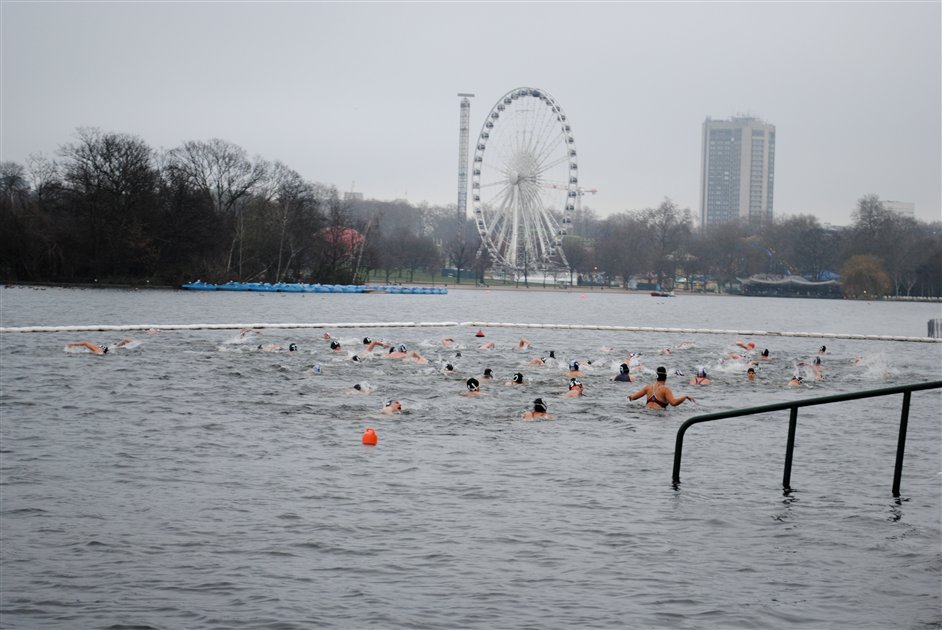
Peter Pan Cup Swimming Race

Peter Pan Cup Swimming Race. Photo: ©LondonTown.

END

Would you like to explore London and beyond with a highly qualified and enthusiastic Blue Badge Tourist Guide?  Use our Guide Match service to find the perfect one for you!

Leave a Reply

Your email address will not be published. Required fields are marked *

You may also like

Top 10 Facts About The Beatles In London

The Beatles are the best-selling band in history and – with 17 No1s – hold the record for the group with the most No1 singles in UK chart history. The Fab Four shot to fame in 1963, the year they left their native Liverpool in the north of England for the nation’s capital London, which was to play a major part in the band’s career over the following seven years until their break-up in 1970. Below are 10 facts about the Beatles in London, facts that can be brought vividly to life through a London Beatles Tour with a Blue Badge Tourist Guide.

Read more

The Huguenots Of Wandsworth, South London

The indelible mark left by the Huguenot community and their development of the silk weaving industry is the stuff of legend. Their skills and entrepreneurial drive led them to settle across the south of England and in America. In the aftermath of the revocation of the Edict of Nantes in 1685, the small trickle arriving in Britain turned into a steady flow and, by the beginning of the eighteenth century, Huguenots made up five per cent of London’s population. Some of these refugee families headed to a small village, now a suburb of South London called Wandsworth.

Read more