



The one hundred and fiftieth anniversary of the invention of the telephone coincides with the centenary of the introduction of the red telephone box to the streets of London. Designed by Giles Gilbert Scott of the famous Scott architectural family, the red phone box was designated as one of the style icons of Britain in 2006. Tourist guides are often asked to find a suitable phone box for clients to have their photograph standing next to, and there are always queues at the phone boxes in Westminster, which also afford views of Big Ben.
Alexander Graham Bell was born in Scotland, but made many of his inventions in Canada. The most famous one was the telephone, although he considered it a bit of a nuisance and would not have one in his office. In fact, he used it mainly to communicate with his wife and mother, both of whom were deaf. (To this day, the telephone is a useful deaf aid.) Bell, however, made his name with the telephone – and gave it to a telephone company across the Atlantic, which is still called Bell Telephone. In 1876, Bell sent a message to his assistant Thomas Watson saying that he wanted him ‘here’, ie in the room where he was working. Watson responded, and the telephone was born. Bell was later granted a patent, although the actual invention of the telephone is the subject of a long-running dispute.
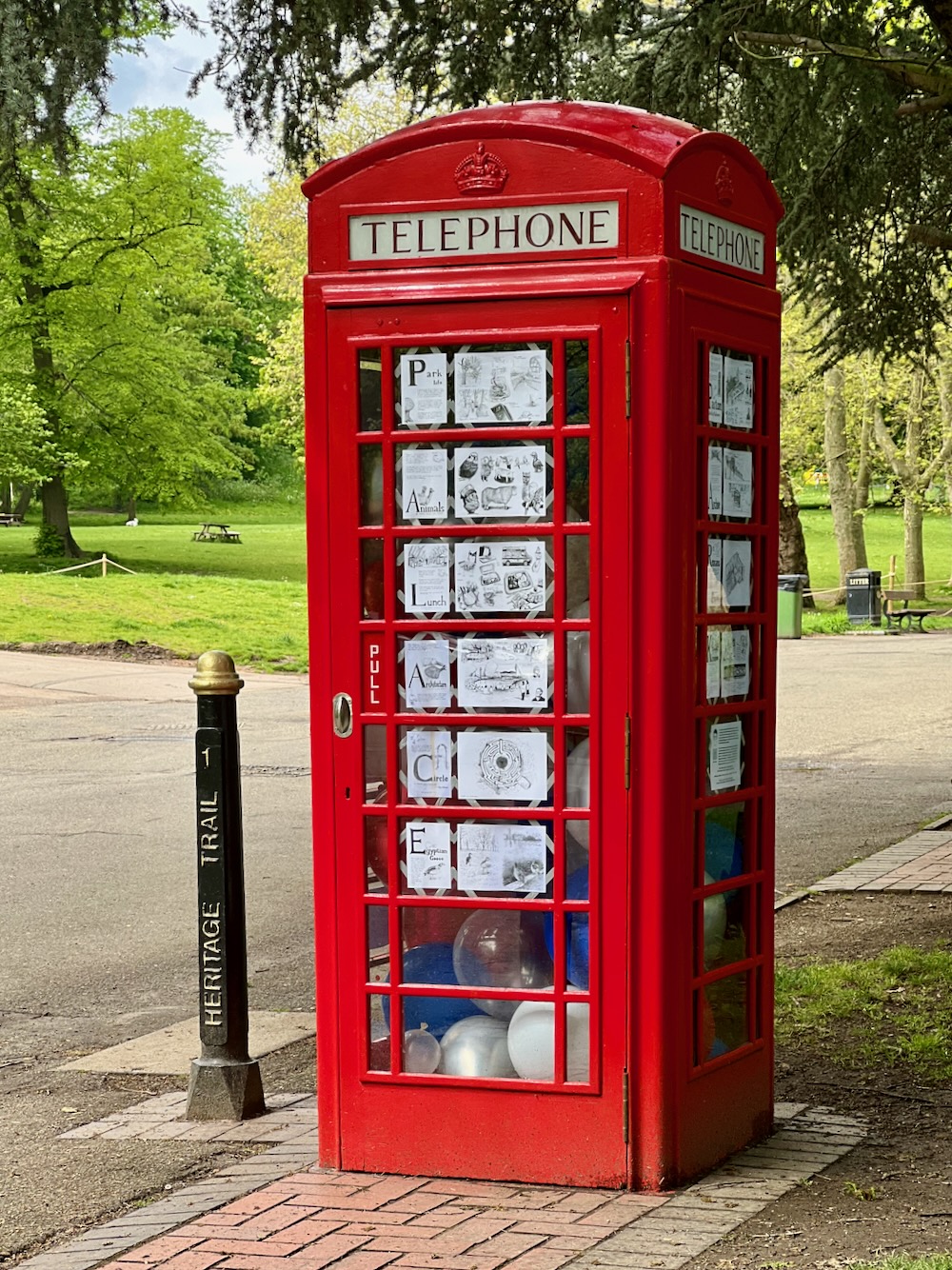 Red Telephone Box in Crystal Palace Park. Photo Credit: © Ursula Petula Barzey.
The Red Telephone Box: From Everyday Utility to British Design Icon
A few of the original K1 phone booths still exist, although most are in museums now. The colour red was gradually adopted for the phone booth as it was always easy to spot. A few people buy old telephone boxes and use them for showers or, on occasion, to make calls. There is a certain retro pride in owning an original phone box and they are often given pride of place in a home. Those in smaller villages are sometimes turned into unofficial libraries. The town council in Eastbourne on the south coast of England insisted that all their phone boxes should have thatched roofs, although none with thatched roofs exist today.
Around 2000 telephone boxes in Britain have preservation orders placed on them. This means they are ‘listed’ as places of special architectural importance and they cannot be knocked down even if the authorities wished to do so. Many are used as wifi hubs, and others have been reborn as cash machines, even libraries, gift shops or places where medical equipment such as defibrillators can be found and used in emergencies. What they are rarely used for is making telephone calls. In the days of the ubiquitous mobile phone, which virtually everybody carries in their pocket or handbag, they are not needed for their original purpose and serve instead as photo opportunities for tourists coming to London.
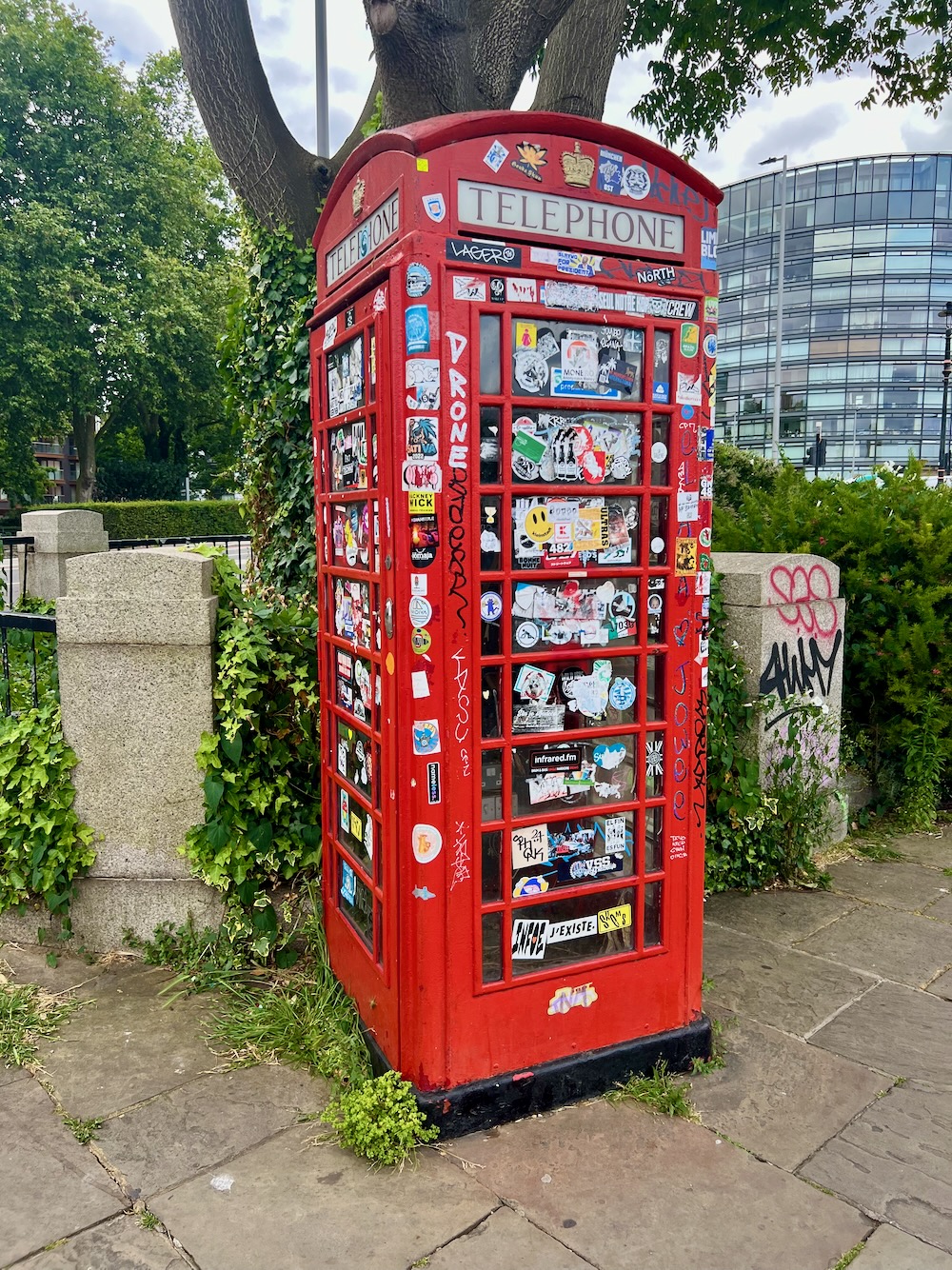 Red Telephone Box on the South Bank in London. Photo Credit: © Ursula Petula Barzey.
British Telecom (BT) now owns about 46,000 phone booths in all, most painted in the traditional red. The phone box has undergone several design changes over the years. Introduced in the 1920s, it was originally made from concrete, later moving to wood. During the Second World War, many soldiers stayed in touch with their families by using phone boxes. They were often placed indoors as the elements were not kind to the wooden design. They moved outdoors in the 1950s when a design using aluminium and glass was introduced and they proved effective in the UK’s unpredictable weather. The fifties and the sixties were the great days of the telephone booth when they let people who were driving for a living stay in touch with their families at home while enjoying a measure of privacy.
The American phone booth became famous as the place where Superman could change into his costume and the mild-mannered Clark Kent could become ‘the man of steel’. Today the American phone booth is virtually extinct, the USA being a pioneer of mobile phone technology and not having a preservation system like the UK which protects older booths.
If people want to take a photograph of themselves at a London telephone booth looking towards Big Ben, they can do so free of charge but they must be prepared to queue up. A line is formed outside the telephone booths in Westminster and people wait in it until their turn comes to take a photograph. They can often do so holding the telephone receiver as most booths have them installed – even if they are no longer used for their original purpose.
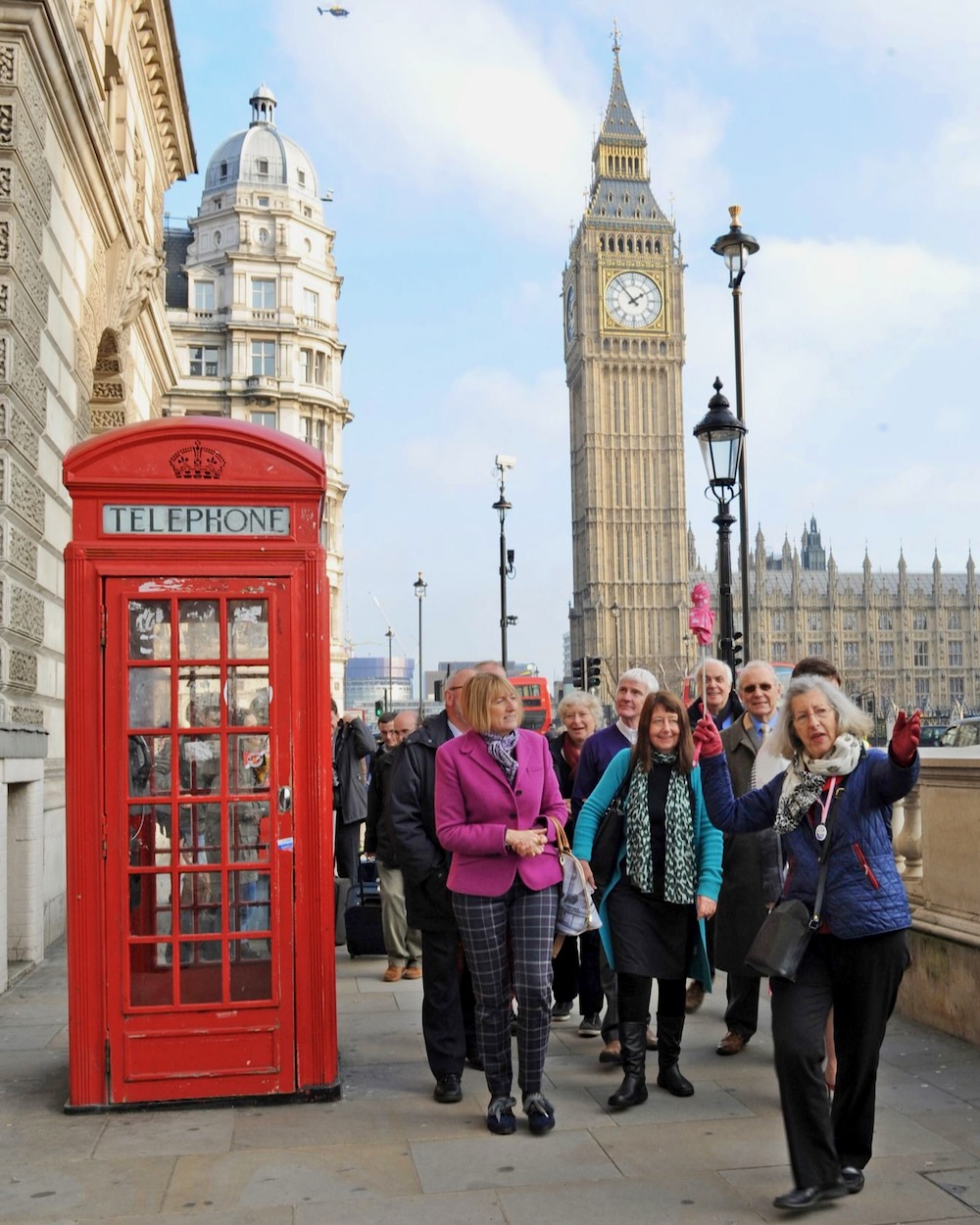 Blue Badge Tourist Guides near Red Telephone Box in London.
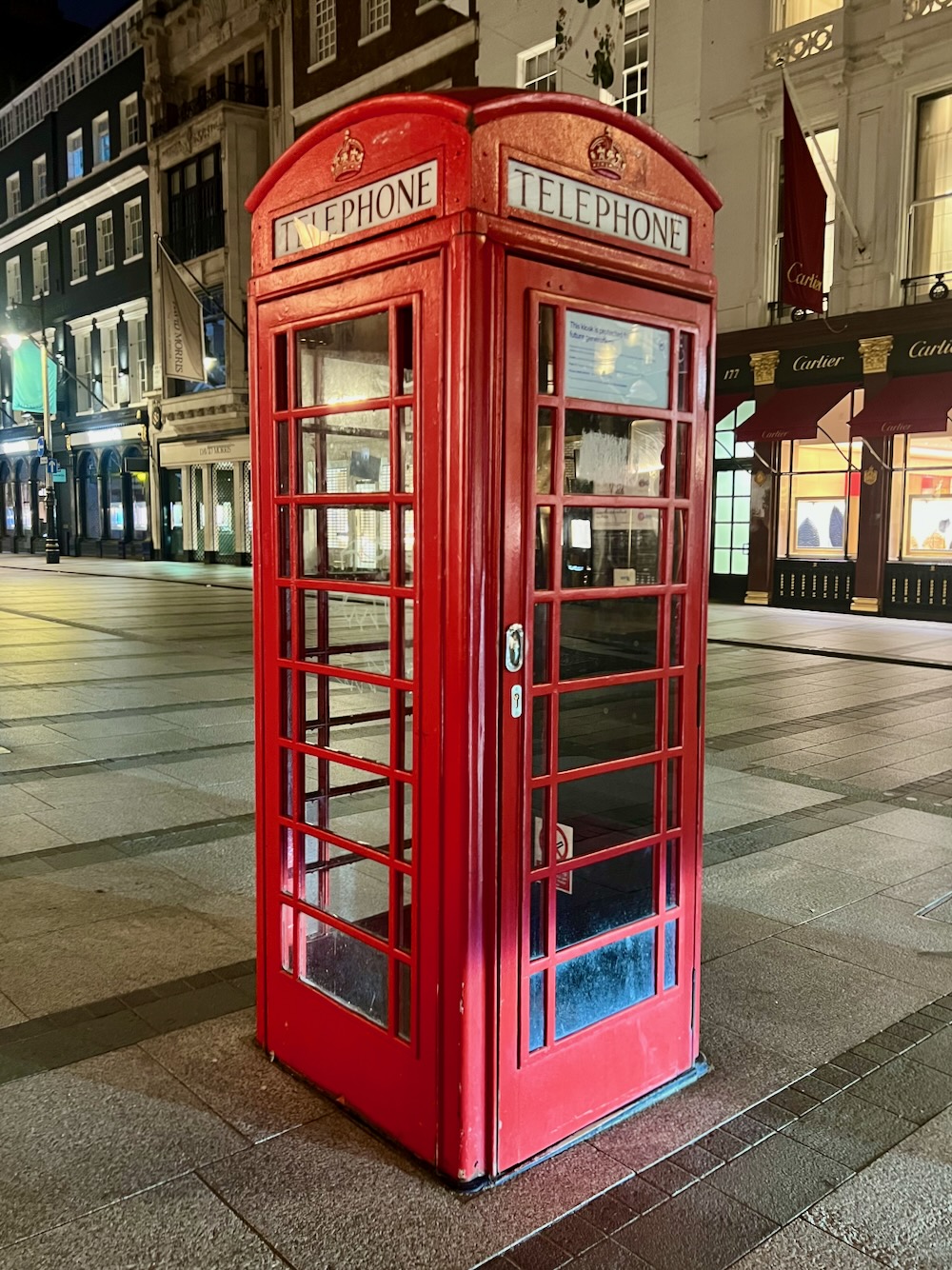 Red Telephone Box on New Bond Street in London. Photo Credit: © Ursula Petula Barzey.


Leave a Reply