
Christine Hoodith

Eight And A Half London Bridges

On a briskly cold January morning, fellow Blue Badge Tourist Guide Steven Szymanski inducted an enthusiastic group into his passion for bridges on a walk that took in Tower Bridge to Waterloo, via St Magnus Martyr, the Steelyard and Bankside. 

A strange new way of looking at London unfolded: the ten-minute journey of old when trains backed from Cannon Street to Charing Cross giving a working girl just enough time to make the rent; Joseph Cubitt’s “half bridge”, sandwiched between road and rail bridges at Blackfriars; how else would you test the correction of the Millennium Bridges “synchronized lateral excitation” other than by sending a Page 3 girl across it holding a plate of jelly? Wonderful stuff! We’re all Bridgemen now. 
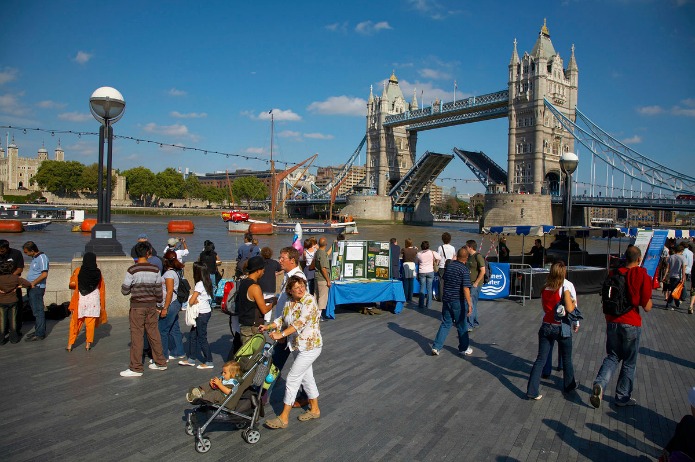
View of Tower Bridge

View of London’s iconic Tower Bridge. Photo: ©ViewOnLondon/ PawelLibera.

Christine Hoodith

Careers in teaching, tourism and the theatre, together with a lively sense of fun, have helped equip me for the delights and challenges of guiding London. I enjoy walking, literature and food and love to combine these enthusiasms in my tours for visitors. I’m especially interested in introducing London…

Leave a Reply

Your email address will not be published. Required fields are marked *

You may also like

Mission Impossible Films: Scenes Shot In London And Around The United Kingdom

The Mission Impossible film series is famous for its use of exotic locations around the globe. Tom Cruise, portraying the top secret agent Ethan Hunt and his team save the world in the world’s tallest building in Dubai or at the Vatican. However, they also use British locations in their films, some of which are seen in the latest instalment, Dead Reckoning: Part One. The second instalment of the film has been made and is due to be released in June 2024.

Read more

The Linnean Society at Burlington House in London

The Linnean Society is one of a number of learned societies that have made Burlington House their home. It was founded in 1788 by the amateur botanist Sir James Edward Smith who, spurred on by the President of the Royal Society, Sir Joseph Banks, purchased the natural history collection of the Swedish naturalist Carl Linnaeus, who is known as the father of taxonomy - the classification and naming of biological organisms based on shared characteristics.

Read more