



It was one of the jewels in the crown of Georgian London: a building so unusual that a suspicious public were unconvinced it would remain standing when it was built in 1762. Designed at the height of the 18th century craze for Chinoiserie, The Great Pagoda at Kew was famously adorned with 80 brightly coloured wooden dragons. The eye-catching dragons were the talk of the town for 20 years, before disappearing in the 1780s, rumoured to be payment for the Prince Regent’s gambling debts.
Historic Royal Palaces and the Royal Botanic Gardens, Kew, recently announced that the dragons are set to return to Kew Pagoda once more as part of a conservation project which will see the building returned to its 18th century splendour. Heritage charity Historic Royal Palaces, which has already completed major restorations of Kew Palace (King George III’s former home) and the Royal Kitchens within Kew Gardens, will be undertaking a two-year project to return the Pagoda to its former glory. Offering one of the earliest and finest bird’s eye views of London, the Pagoda is expected to re-open to the public permanently in 2017.
Probably commissioned by Princess Augusta, and designed by architect Sir William Chambers, Londoners and tourists alike flocked to see the striking 163ft (nearly 50m) tall building, which formed part of a homage to the Grand Tour in the famous gardens. Observers were most impressed by the seemingly golden dragons, designed to dazzle. Though memorable, the dragons were removed in 1784, when repairs were undertaken to the building’s roof. Though rumoured to have been payment for the Prince Regent’s debts, experts believe that, being made of wood, they had simply rotted over time.
Remarkably, in spite of their fame, none of the 80 dragons appear to have survived, beginning a 200-year hunt to rediscover or replace them. The architect who designed the Palm House – Decimus Burton – made an attempt as early as 1843, and right up to the 1970s, the mystery of the lost dragons and the question of how to replicate them was still being discussed. Finally in 2017, it is anticipated that 80 new dragons will adorn the Pagoda at The Royal Botantic Gardens, Kew once more.
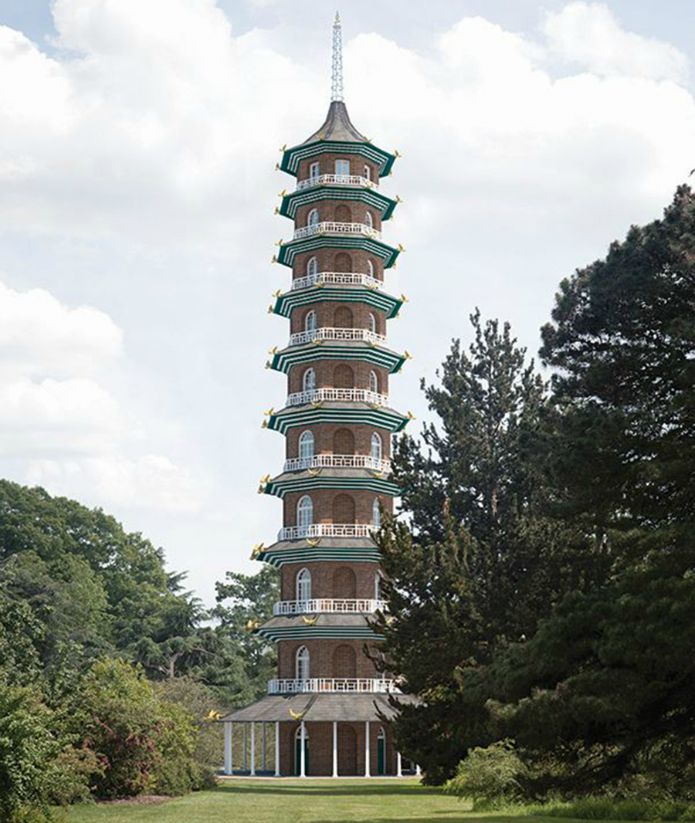
An artist’s impression of what The Great Pagoda will look like following the restoration. Photo: © Royal Botanic Gardens, Kew.



Leave a Reply