



Blue Badge Tourist Guides in London need to have a working knowledge of some of the famous writers and poets associated with the city: William Shakespeare, Charles Dickens, William Blake, and Ben Jonson, all of whom made London their homes for at least part of their lives.
William Wordsworth, English Romantic Poet
However, the man who wrote the most famous poem about London was born in Cockermouth in the Lake District in northern England, almost as far as you can get from the capital while still remaining inside the borders of the country. He never cared much for the big city and is most famous for his poems inspired by the English countryside, particularly one called Daffodils about the famous flowers which are coming into bloom around now. He was the much-loved poet William Wordsworth who was born 250 years ago on 7 April 1770.
Wordsworth’s early years were idyllic but insecure. His father worked for a local aristocrat and landowner the Earl of Lonsdale but was often not paid for his labours and the family struggled financially for much of his youth, although they did live in a large house near to the River Derwent. Wordsworth recalled his childhood and early years vividly in his great autobiographical poem The Prelude, which was not published until after his death.
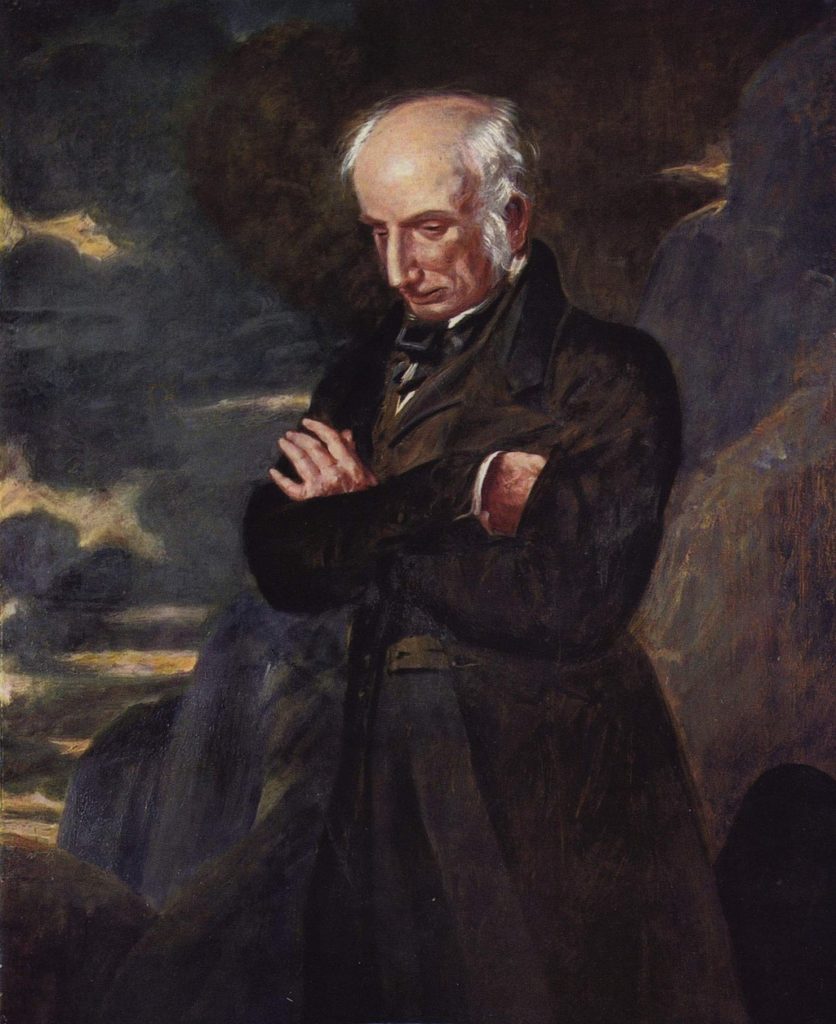
Although he had written poetry since his schooldays, Wordsworth’s poetic muse was not fully unleashed until he took a trip to Europe and went walking through the Swiss Alps, reaching Paris as the French Revolution was gathering steam. He was full of enthusiasm for the new order coming in as a result of the revolution and wrote in The Prelude:
“Bliss it was in that dawn to be alive.
But to be young was very Heaven!”
Later, after the guillotine claimed so many victims, William Wordsworth became disillusioned with the French Revolution and supported the British government in the fight against Napoleon.
During the late 1700s, William Wordsworth suffered one separation, enjoyed one reunion and met the man who was to be his friend and fellow poet for many years. He was reunited with his sister Dorothy, from whom he had separated since childhood after the deaths of their parents, and who remained by his side for the rest of their lives. He had become involved with a French woman Annette Vallon, with whom he had a daughter, but was separated from her because of tensions, and later war, between their two countries. Wordsworth also met the writer Samuel Taylor Coleridge and together they published a famous volume of poetry called Lyrical Ballads in 1796. This marked the beginning of romantic poetry in Britain.
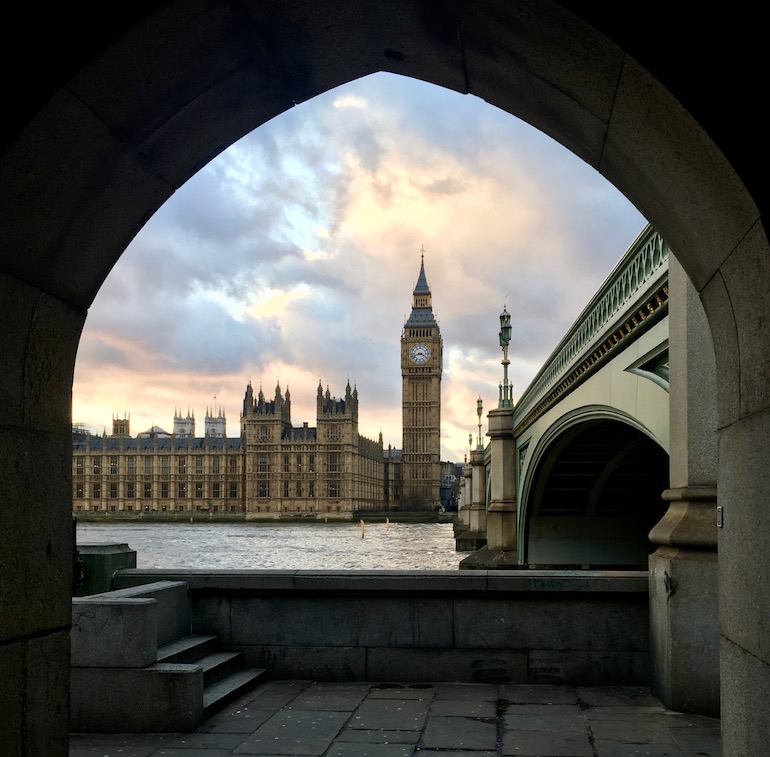
Composed Upon Westminster Bridge
It was while he was on his way to visit his former lover Annette that William and Dorothy Wordsworth passed through London. He wanted to inform Annette that he intended to marry Dorothy’s childhood friend Mary Hutchison and they had spent the night in the capital when they drove over Westminster Bridge on 7 September 1803. The result was a sonnet called Composed Upon Westminster Bridge expressing the beauty of the city in the early morning light:
Earth has not anything to show more fair:
Dull would he be of soul who could pass by
A sight so touching in its majesty:
This City now doth, like a garment, wear
The beauty of the morning; silent, bare,
Ships, towers, domes, theatres and temples lie
Open unto the fields, and to the sky;
All bright and glittering in the smokeless air.
Never did sun more beautifully steep
In his first splendor, valley, rock, or hill;
Ne’er saw I, never felt, a calm so deep!
The river glideth at his own sweet will:
Dear God! The very houses seem asleep;
And all that mighty heart is lying still!
The Wordsworths continued on their way to France, later returning to the town of Grasmere where they had made they home at Dove Cottage, now the Wordsworth Museum, and where they are all buried. It is a long way from Westminster Bridge but William Wordsworth will always be remembered as the man who wrote this, the finest poem about London.


Leave a Reply