



London has been a smokeless zone for over sixty years. The city used to be famous for its ‘London fogs.’ They were described by the novelist Charles Dickens and even led to the creation of a type of American rainwear called London Fog. Then the Clean Air Acts were passed in the late 1950s and 1960s, largely as a reaction to the ‘great smog’ of 1952 and London Fogs gradually became a thing of the past that will hopefully never be seen again.
Long before the Clean Air Acts were passed, the French impressionist painter Claude Monet visited London and painted a series of works portraying the landmark usually known as Big Ben. (In fact, the name applies to the bell, not the clock, although the famous clock is often referred to as Big Ben by unfussy tourists.) Monet visited London on three separate occasions in 1899, 1900 and 1901 and remained for a total of six months. He stayed at the Savoy Hotel on the Strand. Looking down the river towards Westminster, he would have enjoyed a view of the Palace of Westminster and Big Ben which were near his hotel.
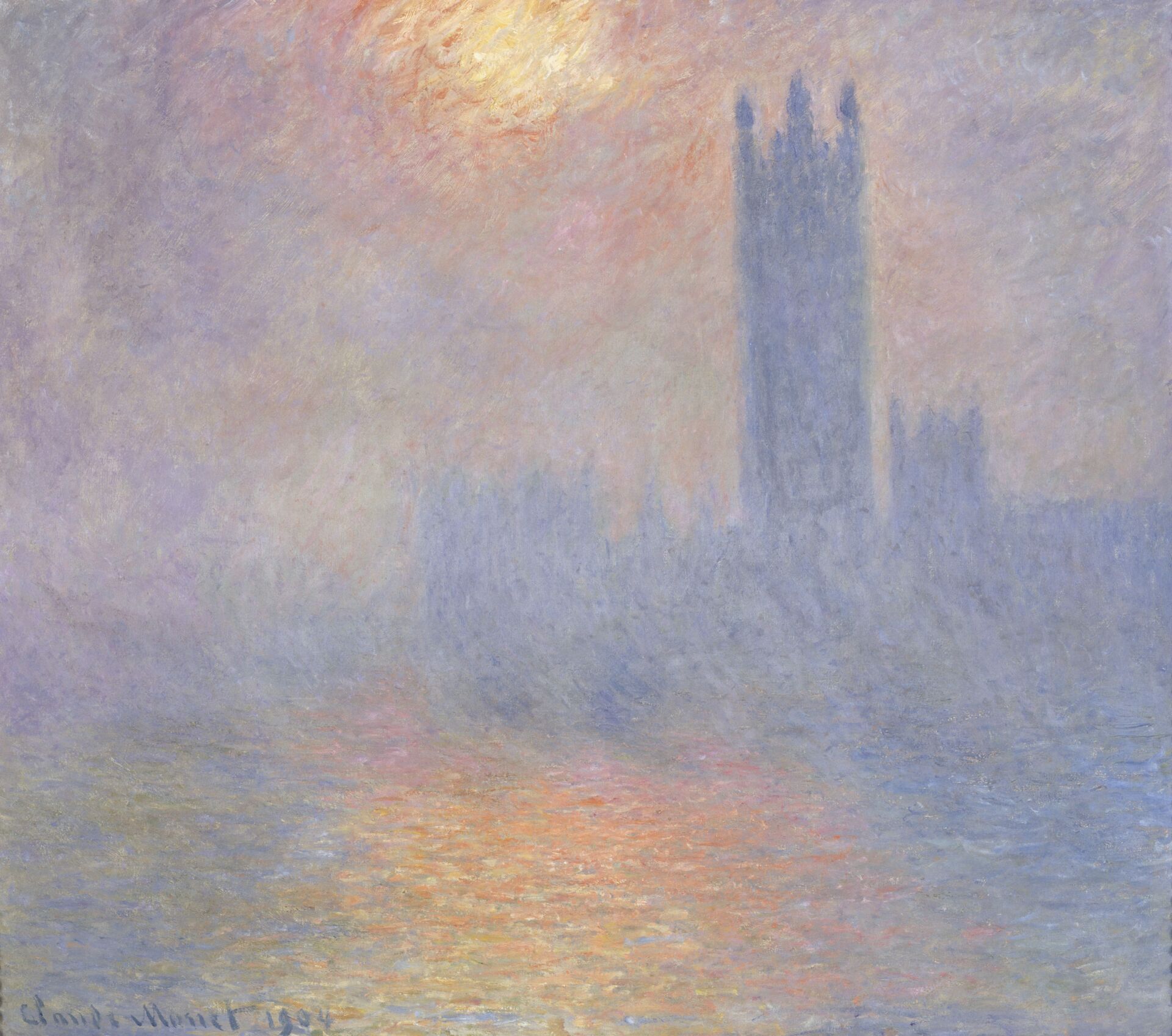 Monet Claude (dit), Monet Claude-Oscar (1840-1926). Paris, musée d’Orsay. RF2007.
Claude Monet painted around 100 canvases of these landmarks. London attracted Monet who saw its atmospheric fog as a result of industrialisation in the what was then the most populous city on earth. In 1904, he showed thirty-seven of his paintings in Vues de la Tamise à Londres at Paul Durand-Ruel’s gallery in Paris. A similar exhibition he was hoping to stage in London did not take place. Such was his success, with so many paintings sold to collectors, particularly Americans, that Monet had too few works left to stage a second exhibition.
Instead, he returned to France, to paint water lilies in his garden in Giverny, even employing someone to dust the flowers so that he could paint them in their natural colours. It is the lily paintings he is famous for today and which are often shown in exhibitions of his work.
However, Monet’s dream of exhibiting his London paintings in the city that inspired them has finally been realised. Twenty of them are on display at the Courtauld Gallery in Somerset House near the Savoy Hotel, and the landmarks are portrayed in them. The Griffin Catalyst Exhibition: Monet and London. Views of the Thames will remain on display until 19th January 2025 and advance booking is recommended.
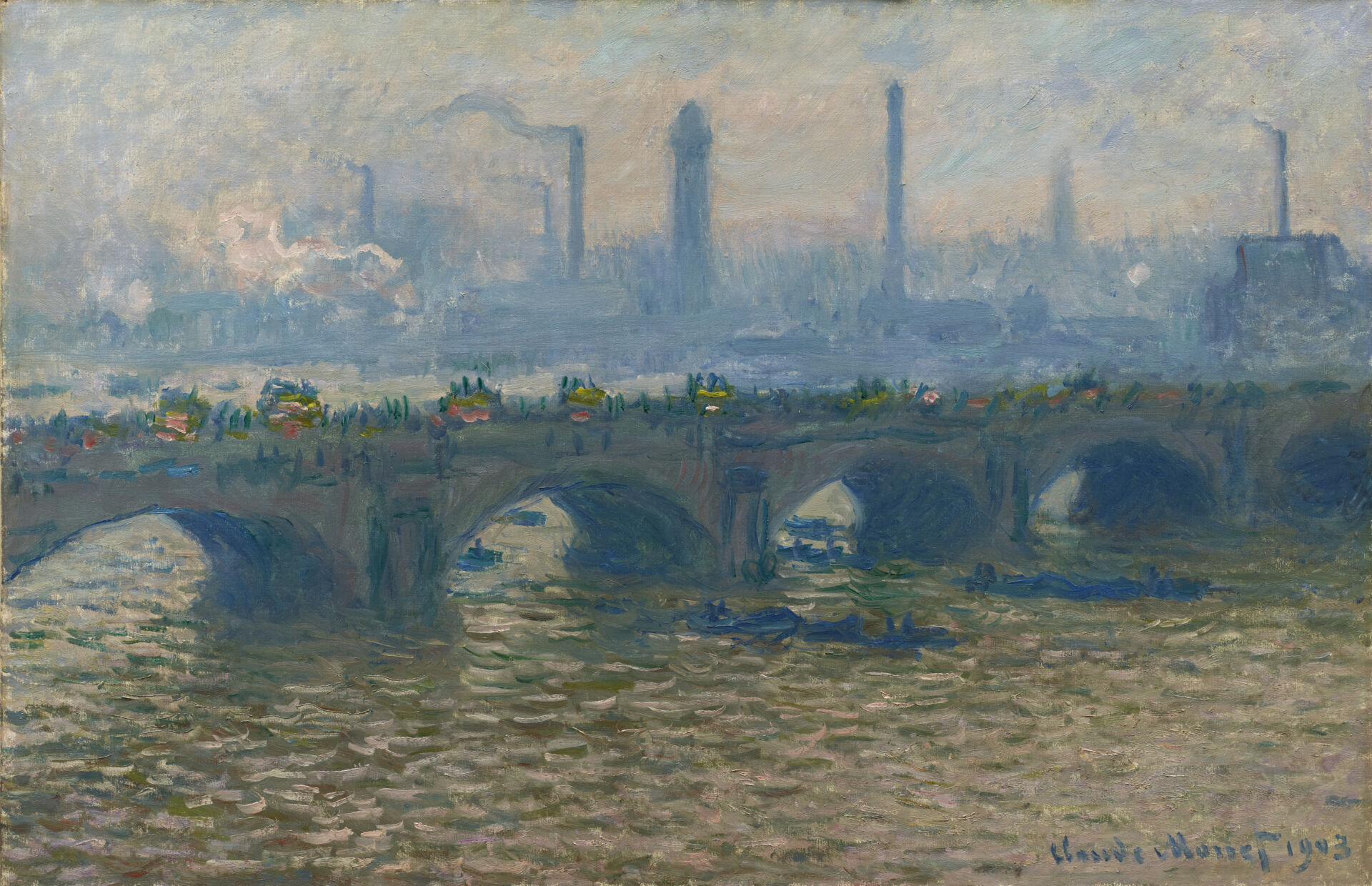 Claude Monet (1840-1926), Waterloo Bridge, Overcast, 1903, oil on canvas, Ordrupgaard, Denmark. Photo Anders Sune Berg.
 Oil Painting of Claude Monet by Carolus-Duran. Photo Credit: © Public Domain via Wikimedia Commons.
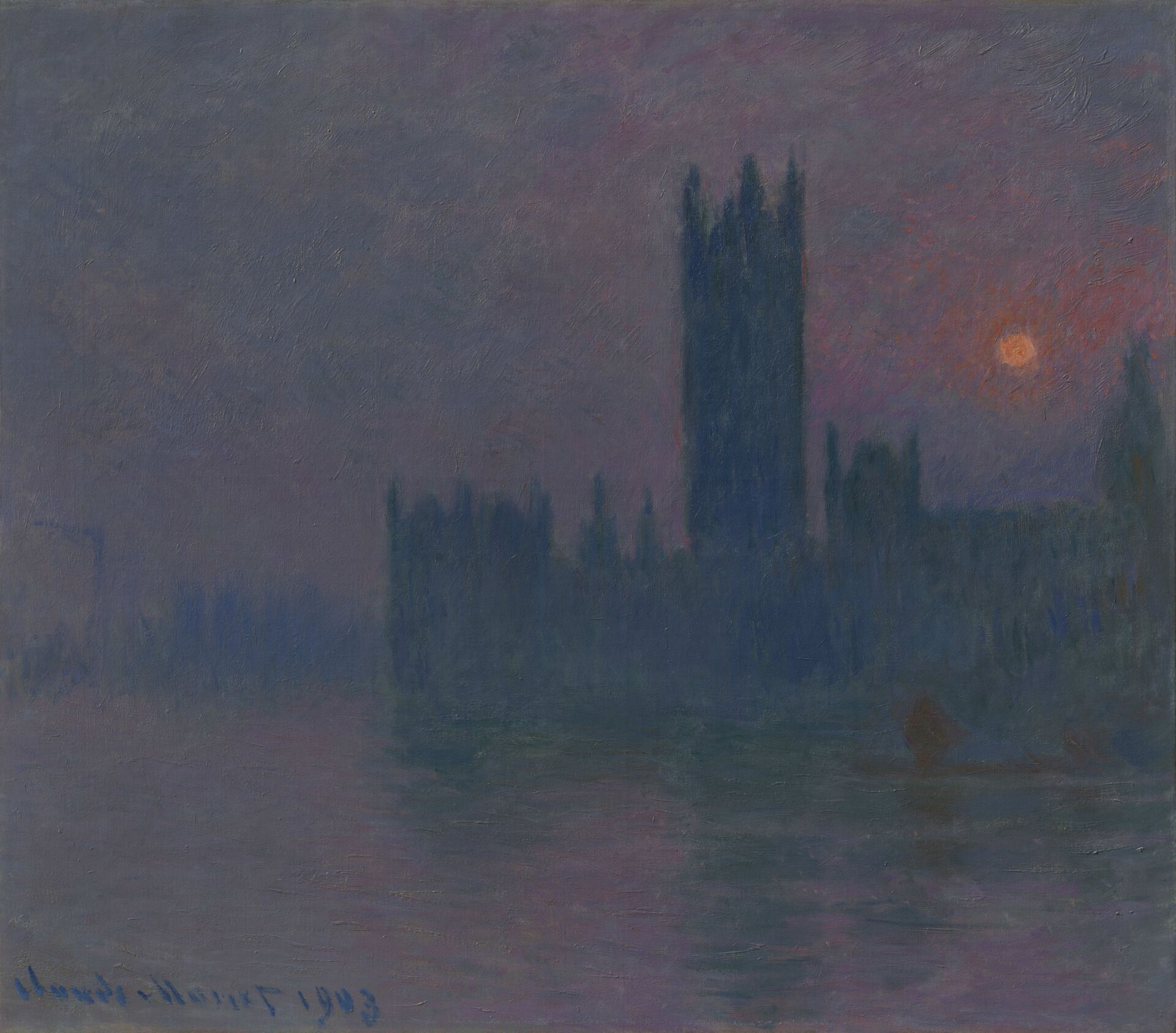 Claude Monet (1840-1926), Houses of Parliament, Sunset, 1900-1903, oil on canvas, 81.2 x 92cm. Hasso Plattner Collection.
Note: Special thanks to fellow Blue Badge Tourist Guide Mary Sewell for providing background information for this blog post!


Leave a Reply