
Tina Engstrom

Kew Garden News: New Waterlily Species Found

A new waterlily species has been found on a plant-hunting expedition in a remote spot in Kimberley, Western Australia. As plant-hunter Carlos Magdalena investigated the waterlily, it became clear this was not the first time the species has been encountered by Kew Garden experts. 

An identical plant had previously been collected in the Northern territories and then grown at Kew Gardens in London. It was thought the lily grown at Kew Gardens must be a hybrid – a cross between two different plant varieties. However, the discovery in Kimberley was thousands of kilometres from the location where the original lily was found, and there were no examples of the suspected parent plants in the surrounding area. It was then that Carlos realised it was indeed a well-defined and separate species. Once this discovery has been backed up with DNA analysis, the next step will be to officially name the waterlily.
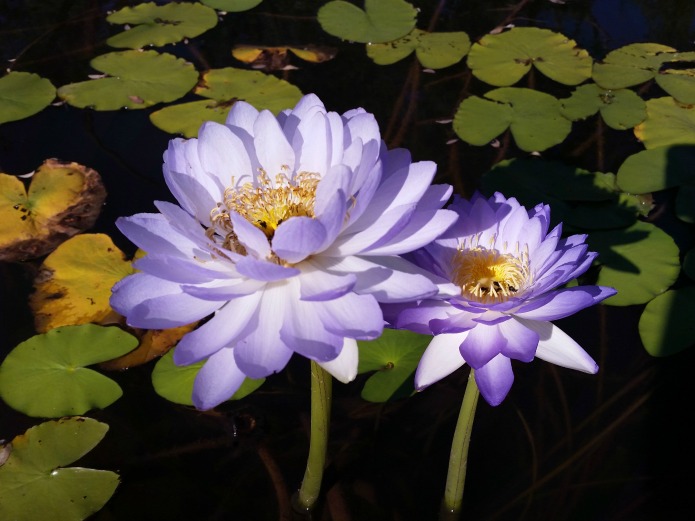
Kew Gardens - Waterlily

Photo: © Carlos Magdalena, RBG Kew.
Leave a Reply

Your email address will not be published. Required fields are marked *

You may also like

9 Facts About The Queen's House In Greenwich Celebrating 400th Anniversary

At the end of February, Turner Prize winner Richard Wright started on a new artwork for the Queen’s House, part of the Royal Museums Greenwich. This is the first time an artist has worked on the ceiling of the Great Hall since Orazio Gentileschi created a series of nine paintings in 1639. Richard’s complex installation, inspired by the Tulip Stairs, will be on view when the Queen's House re-opens after restoration on 4 July 2016 to celebrate the 400th anniversary of its commissioning and design.

Read more

New Uses For Old Power Stations In London

Britain used to rely almost exclusively on coal for its electricity generation, mining it in Wales and the north and central part of England, then bringing it, usually by train, to power stations where it could be burned to heat up water that would generate electricity. Then the water was cooled down in cooling towers that can still be seen in many parts of the country.

Read more