



The Serpentine Gallery unveiled its 15th annual summer pavilion on 22 June brining a touch of Glastonbury to Kensington Gardens in the form of a giant multi-coloured tent.
Spanish architects Selgascano have created a chrysalis of opaque and translucent plastic polygons – complete with four entrances and “secret” corridors – which will host a daytime café and special events for the summer. José Selgas and his wife Lucia Cano have said that they were conscious of the 15th anniversary of the pioneering scheme which has each year invited top-class architects including Frank Gehry, Rem Koolhaas and Oscar Niemeyer to make a temporary pavilion for the gallery in the park. They also took inspiration from the people who will use the space, where Fortnum and Mason will run a daily café, and hoped people will use it “in their best mood”.
The Serpentine Pavilion is located in the heart of the Royal Park of Kensington Gardens in central London.
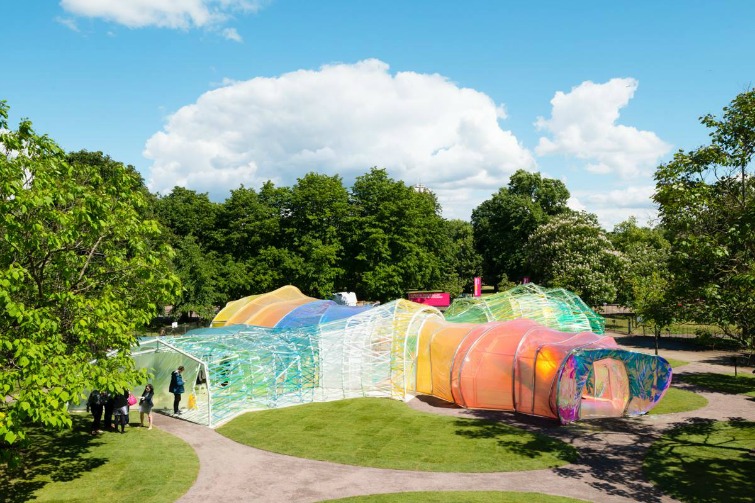
Serpentine Pavilion 2015 Designed By Selgascano. Photo: © Iwan Baan via Serpentine Galleries.
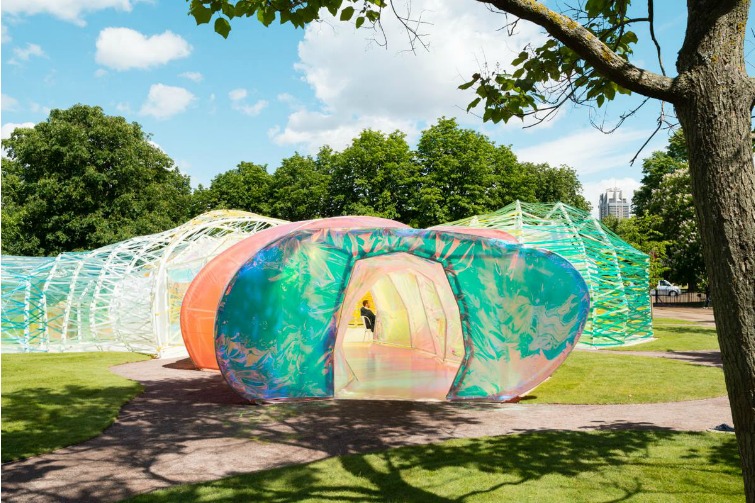
Serpentine Pavilion 2015 Designed By Selgascano. Photo: © Iwan Baan via Serpentine Galleries.
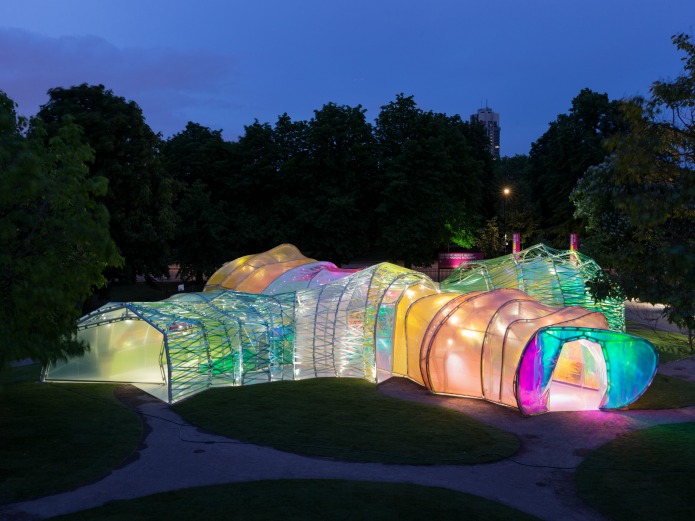
Serpentine Pavilion 2015 Designed By Selgascano. Photo: © Iwan Baan via Serpentine Galleries.


Leave a Reply