



A new museum designed by Eric Parry will give an overview of the history of Charterhouse in London which since 1348 has served as a monastery, private mansion, boys school and an almshouse. Entrance will be free and the museum will open Tuesdays to Sunday from 11:00am with last entry at 16:45pm. Visitors can also take a tour of the grounds for £10 or £20 if led by a Brother. Charterhouse Square is being restored to its 18th century design and will be open during the museum opening hours.
During the excavation of historic Charterhouse Square (outside the Crossrail development) the remains of kitchens were found, believed to have been used to prepare meat dishes for guests since the monks did not eat meat. A body was also found 1.5 metres below ground, hopefully nothing to do with the kitchen!
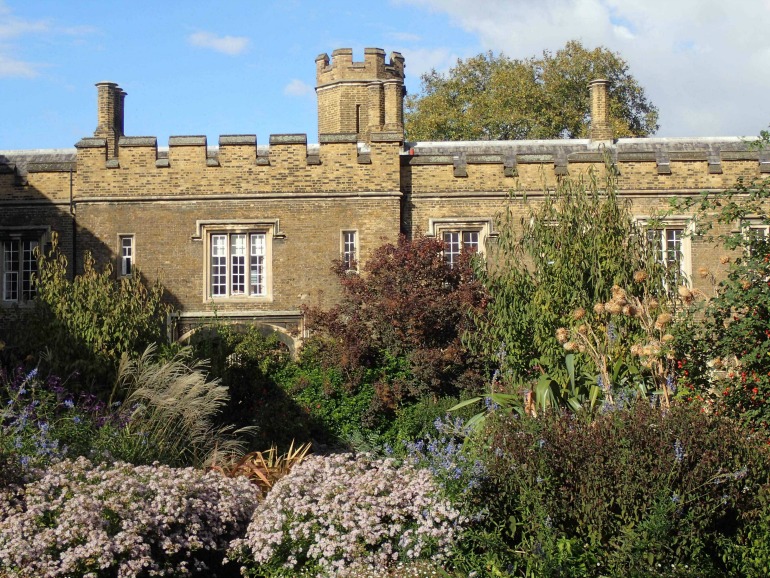 Charterhouse Museum. Photo Credit: ©Isobel Durrant
The Charterhouse Museum is being built in a gap between the buildings which front onto the square. It is the site of the first church, built here by Sir Walter de Manny, who bought the land in 1348 to bury victims of the Black Death. The Bishop of London persuaded de Manny to found a Carthusian monastery. Manny became the first prior and was buried in the chapel. The church was destroyed by WWII bombing.
The monks refused to accept Henry VIII’s supremacy of the Church. Its abbot plus two other monks were hung, drawn and quartered and 13 other monks died in prison. After the dissolution, 15 acres of monastery land was sold and a Tudor mansion was erected.
In the early 1600s it was sold to Thomas Sutton, who founded Charterhouse School. The tour visits the chapel built at this time and the wood panelled Great Hall where the current Brethren eat, plus a brick vaulted corridor which has one of the Carthusian cell doorways. Food was passed by a lay- brother to the monk via an opening which prevented any physical or visual contact (the order was strictly a silent, contemplative one). The monks had a garden behind their cell to grow food, a sleeping area and an oratory.
Today the Brothers at Charterhouse do not have to be Christian but they must be aged over 60, be in need of support, and hold a British or Irish passport. Rent is charged according to what they can afford. They are supported so that they can live independently although there is an infirmary for end of life care. Women have not been admitted in the past but are now allowed to become Brethren at the Charterhouse.
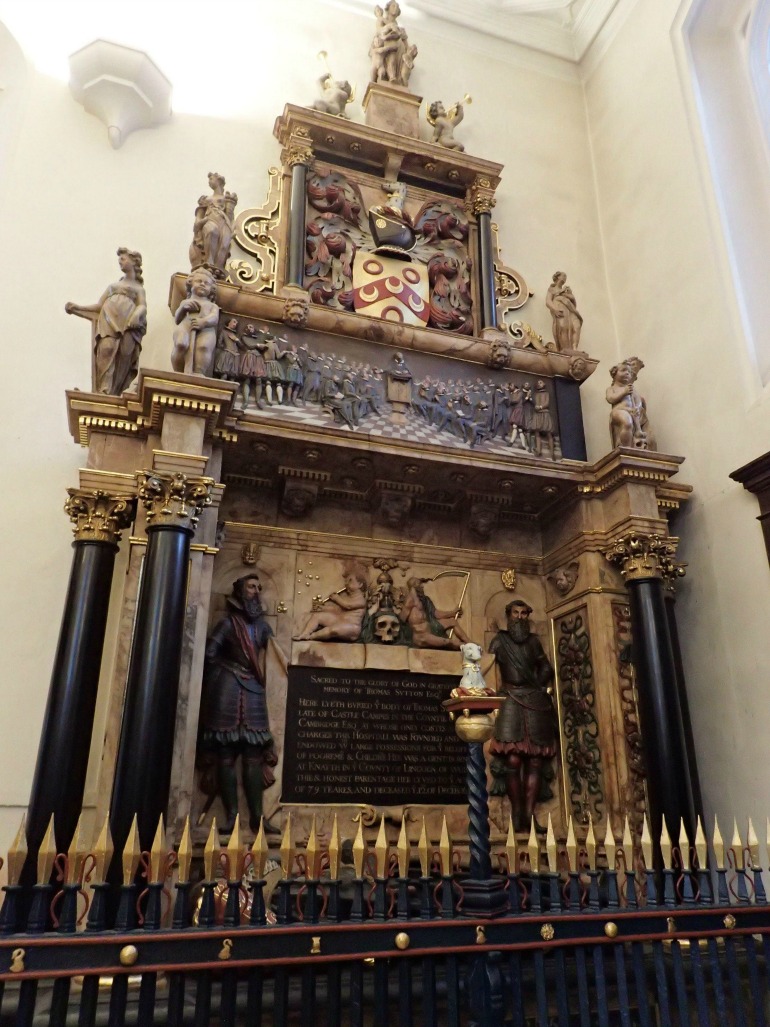 Charterhouse Museum – The Tomb of the Charterhouse Founder, Thomas Sutton. Photo Credit: ©Isobel Durrant


Leave a Reply