



The BBC is one of the most trusted of British institutions. ‘I heard it on the BBC,’ is a common claim as to the verity of a statement around the world. The implication is that it must be right because the BBC said it. People trust the organisation in the way they often do not trust statements made by their own governments, where the media outlets are all too often controlled by the very governments who want their statements taken on trust.
The independence of the BBC is one of the most important aspects of its trustworthiness. No other country has a similar broadcasting organisation which is independent of the government and also commercial free. Most broadcasting relies on advertising and a few countries, such as Ireland, also charge a licence fee for owning a television but none rely solely on the television licence fee for funding, as the BBC does. The BBC is not controlled by the government and it is also free of control by an oligarch who may have a political agenda.

The BBC has an income of £200 million annually and assets of over two billion pounds. It employs over 20,000 staff, some of whom earn more than the Prime Minister. It is largely funded by a licence fee of (in 2025) £175, although some of its money comes from selling programmes abroad. A few people object to paying this licence fee but most consider it good value for advertisement free, independent broadcasting. The BBC, which was founded by John Reith, is considered a ‘national treasure’ by most people in Britain and the world.
People who visit this country have usually heard of the BBC and are interested to see where it is based. The headquarters of the BBC is at Broadcasting House in Upper Regent Street and guides often point it out on a panoramic tour of London. Some may draw attention to the carving on the outside of the building of Prospero and Ariel from Shakespeare’s play The Tempest. This is simply meant to symbolise the power of radio broadcasting over the airwaves. Ariel was a sprite in the play and, at the end, he is given bodily form by Prospero.
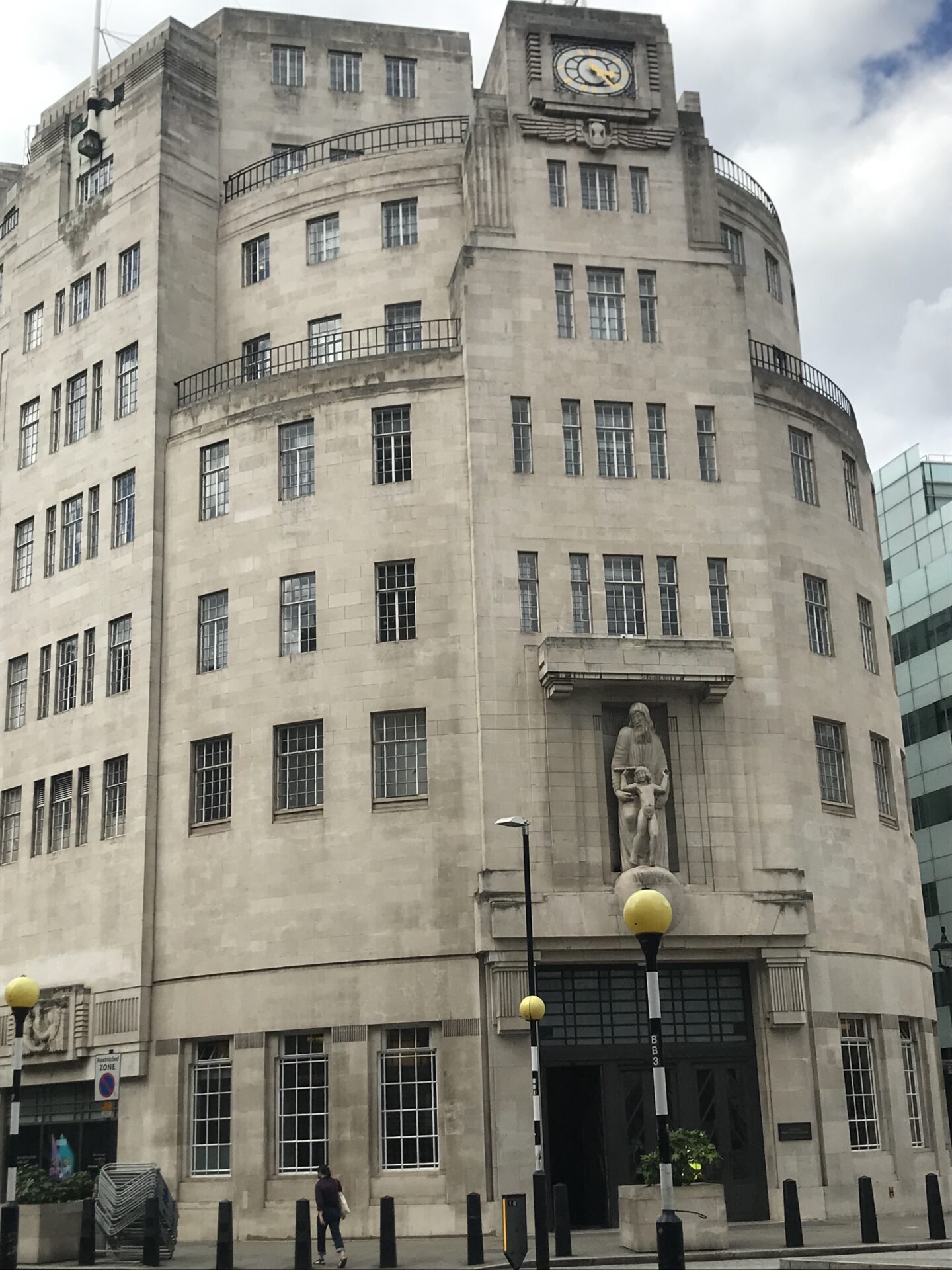 BBC London headquarters with Prospero and Ariel statue by sculptor Eric Gill. Photo Credit: © Edwin Lerner.
The carving is, however, controversial because it was sculpted by Eric Gill. His posthumously published diaries, reveal that he sexually abused two of his daughters as well as his pet dog. He was and remained married to his wife Ethel Moore throughout his life and became a Roman Catholic in 1913. Gill sculpted the stations of the cross at Westminster’s Catholic cathedral and accepted many commissions from Roman Catholic clients. The BBC sculptures of Prospero and Ariel were defaced in 2022 by an anti-paedophile campaigner and there have been calls – so far ignored – to remove his works from places viewed by the public.
Lord Reith, as he became, was from Scotland and stood six foot six inches in height. Wounded and almost killed by a sniper in the First World War, he sported a scar on his face for the rest of his life. Reith was employed by the fledgling BBC and quickly rose to become its first Director General, believing that it was his duty to establish a national broadcasting corporation which would ‘educate and entertain’ its listeners. Reith was a notorious martinet and hard taskmaster who insisted that the BBC’s newsreaders should always read the news dressed in a tuxedo and bow tie. He is fondly remembered at the BBC, however, and every year it broadcasts the Reith Lectures, talks that are given by a prominent thinker.
The listeners became viewers when television came to the fore in the post-war period. Initial television broadcasts were made by the BBC in 1932 from Alexandra Palace in north London and resumed after the Second World War. Many British families, however, obtained their first television to watch the coronation of Queen Elizabeth the Second in 1953. In those days broadcasts were on one channel only and in black and white. The BBC now runs over ten television channels and always broadcasts in colour, while the old Home Service, Light Programme and Third Programme have been replaced by over fifty radio channels.

The establishment of ITV in 1955 (which was opposed by Lord Reith) gave the BBC a competitor. Independent television, which is free to air, and not covered by the licence fee. It is funded by airing commercials, which have to be distinguishable from the programming, some of which, like the BBC’s, is sold overseas. Many films are shown after they have first been seen at the cinema and ITV has been successful enough to have purchased all of the James Bond and Harry Potter films, as well as many others. It was partly founded by Lord Thompson, a newspaper magnate who said that half the money he spent on advertising was wasted. The only problem was that he did not know which half it was.
The BBC broadcasts news and programmes around the world in over thirty languages and the World Service, as it is known, used to be based in Bush House in Aldwych, which is now part of the University of London. The World Service, however, has moved to Broadcasting House. It is considered an important part of the BBC and is partially responsible for the high reputation of the BBC around the world for impartiality and accuracy in its broadcasts.
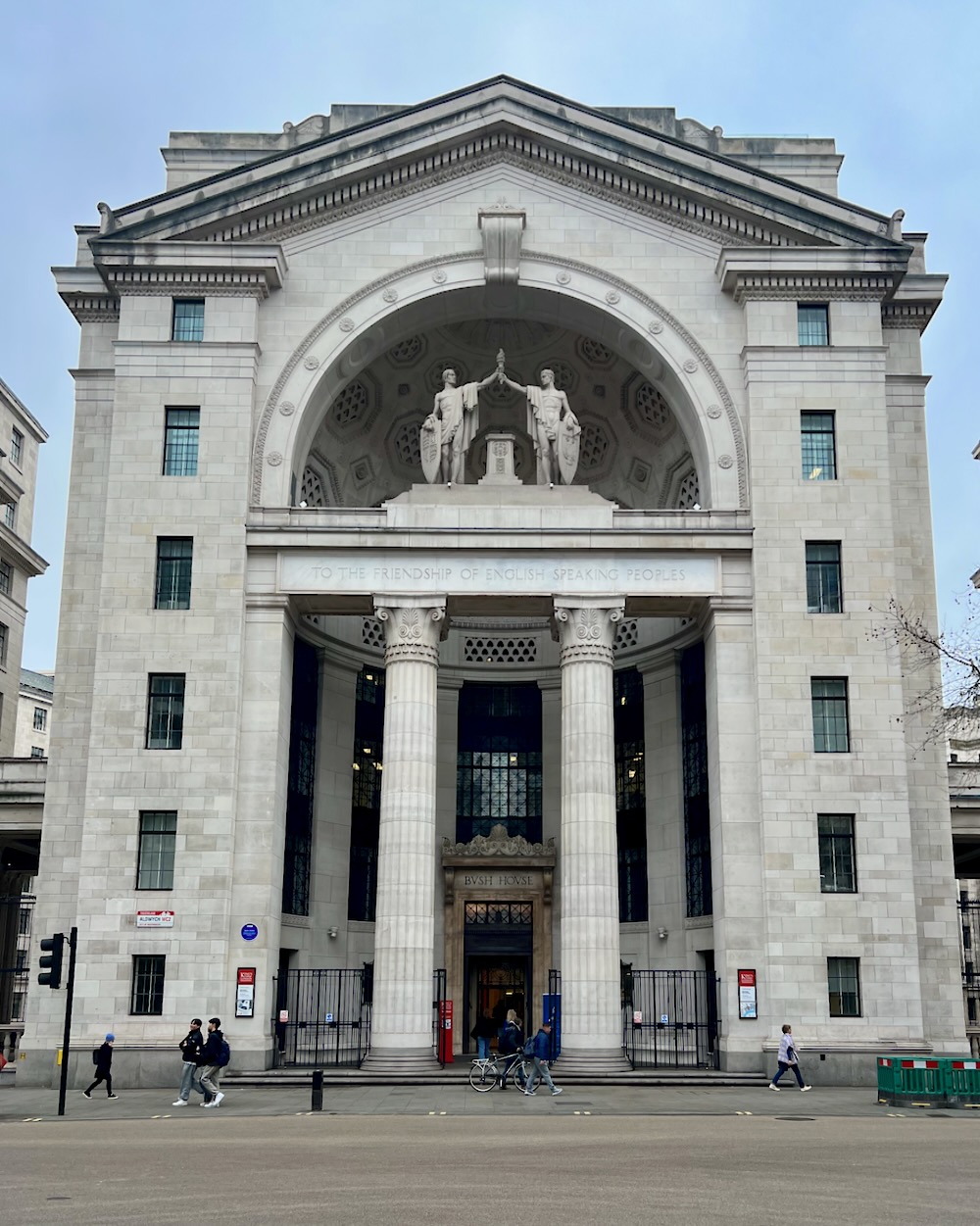 Bush House in Aldwych, former home of the BBC in London. Photo Credit: © Ursula Petula Barzey.


Leave a Reply