

Granted Freedom of the City of London in 1993, I have often been asked whether I had ever exercised my right to herd cattle or sheep across London Bridge. This ancient privilege to bring animals into the City without payment of tolls had long since been abandoned when the livestock markets closed and in any case, was of no special importance once the gates and a single river crossing were replaced by the modern landscape we all know today. Likewise, the supposed advantage of a hangman using silken rope rather than rough hemp in the event of my being sentenced to death was lost when such harsh punishment was removed from the statute books many years ago.
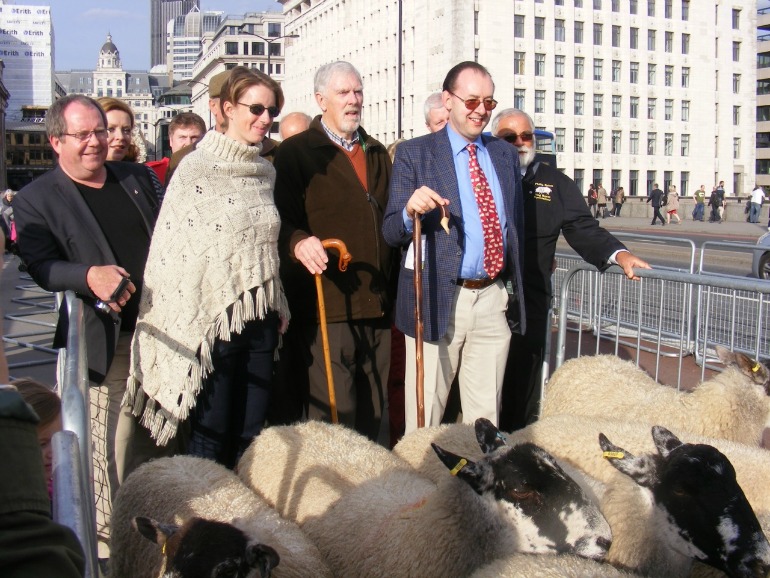 Sheep drive over London Bridge. Photo Credit: © David Jagger.
However, there still lingered in the heart of many Freemen, male and female, a longing to complete their Free status by re-enacting this famous sheep drive across London Bridge. Over the years, the occasional individual managed to avoid censure and the attention of police but any drive was ad hoc and clearly required some better organisation if the tradition was to grow.
Since 2012, the annual sheep drive across London Bridge has been run by the Woolmen’s Company Charitable Trust together with The Company of Merchants of the Staple of England. Six hundred Freemen each year can now exercise the right to herd sheep over London Bridge during the last weekend of September each year. Famous Freemen including Barbara Windsor and Nigel Mansell have opened the event and with entry proceeds going to charity. A Wool Fair along with other wool-related events is also often held around the foot of The Monument.
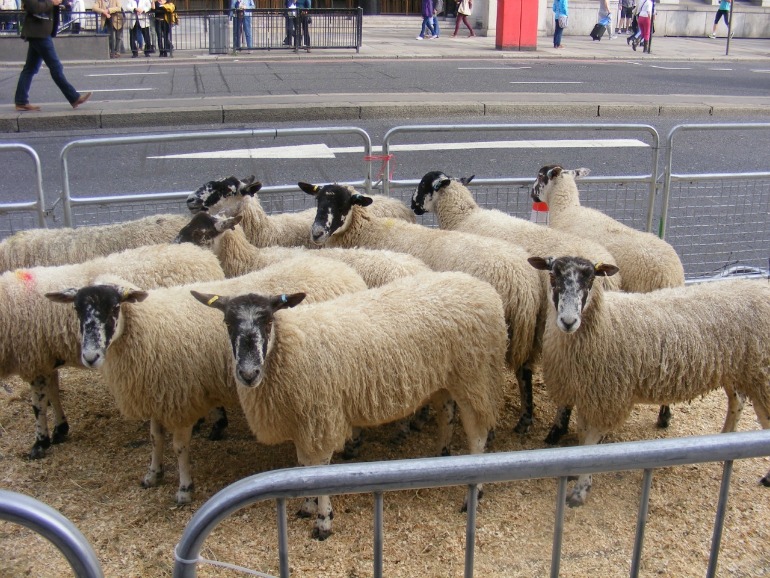 Sheep drive across London Bridge. Photo Credit: © David Jagger.
My last sheep drive across London Bridge was in 2014 when I shared a flock of nine ewes with eight other Freemen including a Peer of the Realm and a radio personality. The drive commenced outside Fishmongers Hall in the direction of Southwark. Dress was optional although several ladies did wear Bow Peep outfits. Walking alongside was a shepherdess from the RSPCA, and a vet was on hand to decide after each drive on the appropriate rest periods for the ewes. A signed certificate rounded off the day. My Freedom was now complete!
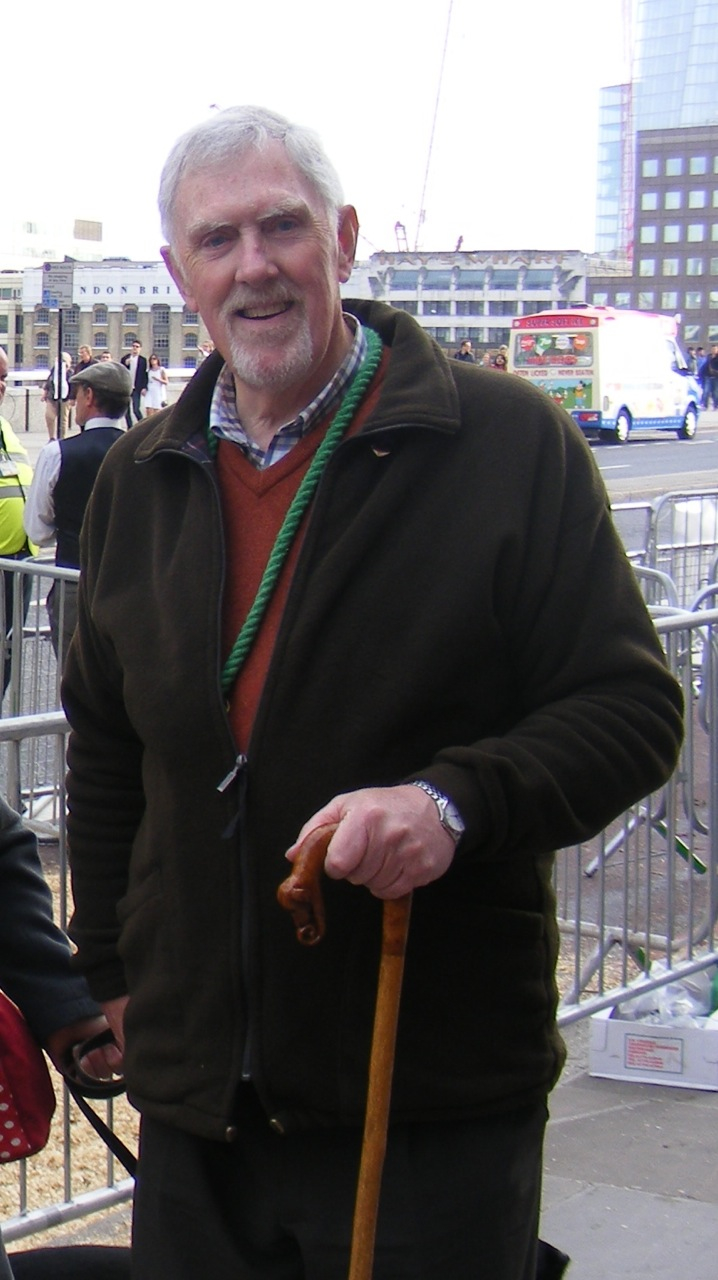 Blue Badge Tourist Guide David Jagger has the right to drive sheep across London Bridge. Photo Credit: ©David Jagger.
For more information on the annual sheep drive across London Bridge, visit the website for Sheep Drive & Livery Fair.


Leave a Reply