

Blog
Blog Posts

Harry Potter’s Importance to Tourism in London and Britain
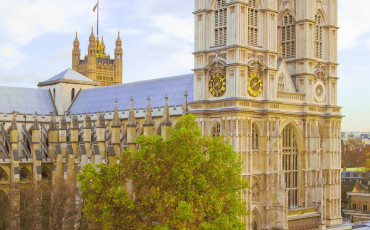
Blue Badge Tourist Guides in London are used to taking people around places that have been around for a while and are often asked, ’How old is this place?’. Hogwarts School may have existed for some time, but nothing in the Harry Potter series of books and films is over thirty-five years old. Via this blog post, I’ll take a look at some of the places associated with the boy wizard.
Read more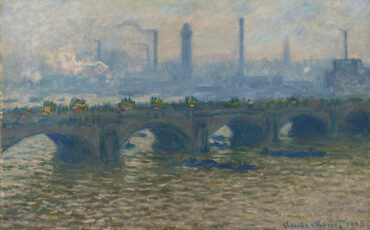
Claude Monet Exhibition at the Courtauld Gallery in London
London has been a smokeless zone for over sixty years. The city used to be famous for its ‘London fogs.’ They were described by the novelist Charles Dickens and even led to the creation of a type of American rainwear called London Fog. Then the Clean Air Acts were passed in the late 1950s and 1960s, largely as a reaction to the ‘great smog’ of 1952 and London Fogs gradually became a thing of the past that will hopefully never be seen again.
Read more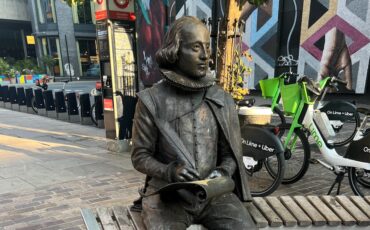
William Shakespeare – A London Eastender
It is not known to many people, but William Shakespeare began his theatrical career in the East End of London rather the place most often associated with him – Southwark, the area to the south of London Bridge. Sam Wannamaker, the American actor and director, felt that Shakespeare deserved a monument in London, the city where he made his fame and fortune. Wannamaker decided to rebuild the Globe Theatre in Southwark near the Tate Modern Museum and raised the money from donors to do so.
Read more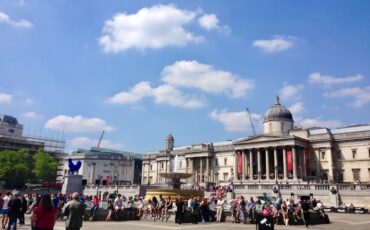
Fourth Plinth In Trafalgar Square – Filling The Most Famous Empty Space In London
Blue Badge Tourist Guides on a tour of London will probably go through Trafalgar Square in the centre of the city. One of its most striking features is the sculpture on display on the northwest side of the Square. Known simply as ‘The Fourth Plinth,’ it remained empty until 1999. It was consistently rumoured that a statue of the late Queen Elizabeth II was planned for this space but she had a very long life and died at the age of 96 in 2022.
Read more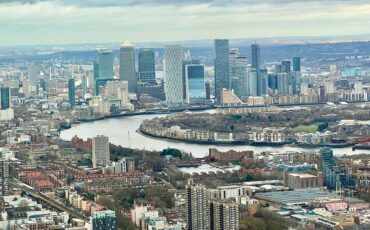
London’s Tallest Buildings: A Journey Through the City’s Iconic Skyline
London was built on clay so it was harder to build high than in New York, which stands on rock. For many years the tallest architects could construct a skyscraper was 5 – 600 feet. Then new technology allowed them to build higher and London’s tallest building is currently The Shard next to London Bridge, which is over 1000 feet tall. One Undershaft in The City was built to match The Shard in height and it too will have a viewing tower with an education centre operated by the recently renamed London Museum (formerly Museum of London).
Read more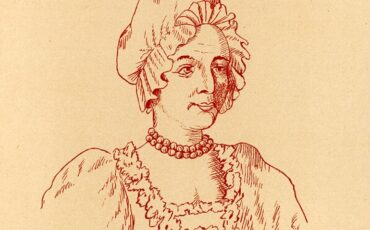
Theresa Cornelys and London’s First Night Club
Also known as Mme de Trenti or Mrs. Smith (1723-1797), Theresa Cornelys was an opera singer, visionary artist, courtesan and mistress of ceremonies who captivated wealthy English society for nearly twenty years. Her scandalous life, both private and public, was a popular topic among European aristocratic circles.
Read more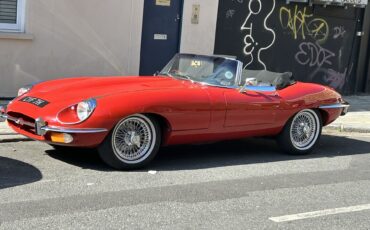
British Luxury Cars: Rolls Royce, Bentley, Jaguar and Aston Martin
Great Britain may not have a booming car industry these days but it still owns many of the great names of world motoring. These include Rolls Royce, Bentley and Jaguar as well as Aston Martin, made famous as the car of the secret agent James Bond, another British icon.
Read more
Happy 200th Birthday to The National Gallery in London
The main impetus for the founding of The National Gallery was the purchase, by the British government, of thirty-eight paintings – including masterpieces by Rembrandt, Rubens and Titian – from the collection of John Julius Angerstein, a successful banker and marine insurance broker born in St Petersburg to German parents. When the gallery first opened to the public, in May 1824, it was housed in Angerstein’s former home at 100, Pall Mall.
Read more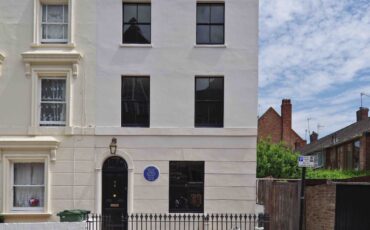
From Humble Abode to Creative Hub: Van Gogh House London Reinvents Itself
Did you know that Vincent Van Gogh lived in London before he became an artist and that the house in which he lived is open to the public? Van Gogh’s House is a non-profit contemporary arts organisation based in the South London boarding house where the young Vincent lived in 1873-74.
Read more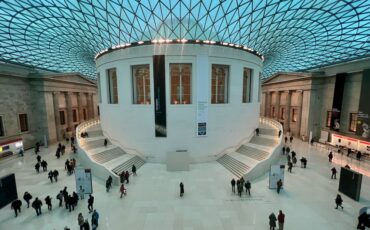
Building a Future, Facing a Past: The British Museum’s Expansion Plans
The British Museum is one of the world’s great museums but has a very inappropriate name. Many of the treasures on display were acquired – sometimes by fair means, sometimes by foul – over the centuries when Britain was a great imperial power and most people thought little of the morality of taking treasures from countries that had been colonised as part of the British empire and displaying them in central London in a building designed by Sir Robert Smirke and his brother Sidney. Many of these countries now want their treasures back and are growing increasingly strident in demands for their return.
Read more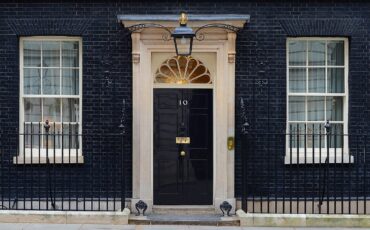
Unveiling the Mysteries of UK General Elections
Unlike in the United States, where the Constitution was written down by the Founding Fathers nearly 250 years ago and is regarded as sacrosanct by many Americans, the British Constitution has never been formally inscribed but instead has evolved over centuries. The Supreme Court in Parliament Square can only decide if the government has acted within the law as it stands and cannot decide what that law should be. The Court does not have the power to overrule the politicians who sit in the Palace of Westminster opposite. Parliament always has the ultimate authority under the British system.
Read more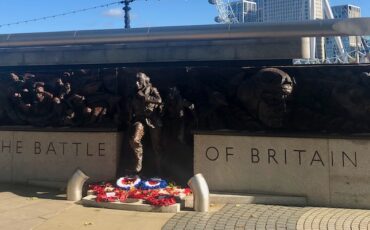
Five Top Battle of Britain Sites to Visit in London
This summer marks 80 years since the Battle of Britain was fought in the skies over southern England. This was a fight for Britain’s survival against a Nazi Germany that had conquered much of western Europe in just a few short months. With the fall of France in June, Britain expected a German invasion, and one was indeed being planned under the codename Operation Sealion. However, for the invasion to be successful the Germans first needed to control the skies over Britain – they needed to destroy the Royal Air Force.
Read moreThe City of London Tour

Experience the Character and Excitement of London’s oldest Quarter known as The City!
A City of London Tour is unmissable because…
“The City” is…