



Every now and again, you come across a truly extraordinary figure intimately connected to seismic change in the world. Benjamin Franklin, one of the Founding Fathers of the U.S.A., fits this description. A visit to 36 Craven Street, off the Strand in Westminster, Franklin’s only surviving house on either side of the Atlantic, reveals much about him, and the part that he played not only in the build-up to the American Revolution, but also in an era of major scientific breakthroughs and discoveries.
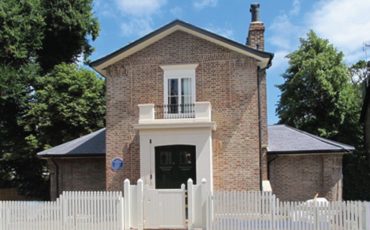
Walking down Craven Street, just next to Charing Cross Station, past the beautifully preserved Georgian houses, you feel you are slipping back three centuries into the Georgian era. Franklin lived here from 1757 to 1775, as a lodger on the first floor of widow Margaret Stevenson’s house.
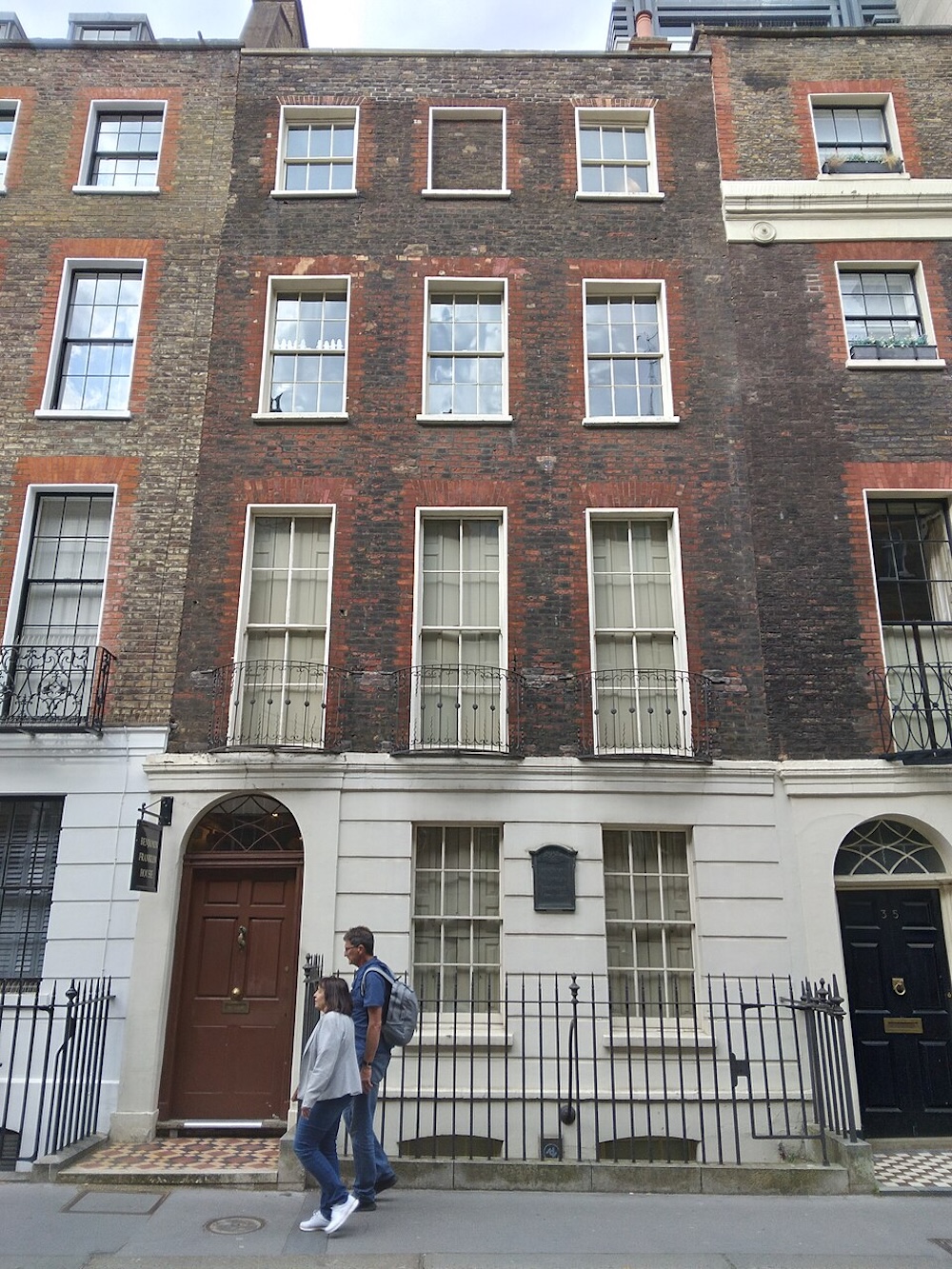 Benjamin Franklin House on Craven Street in London. Photo Credit: © Ridiculopathy via Wikimedia Commons.
Eminent Envoy
Benjamin Franklin had already spent a few months in London back in his humble youth, being trained in a printing shop in – of all places – St Bartholomew the Great Church, Smithfield. This time, however, he was an envoy for four of the colonies; the holder of the exalted role of Postmaster General of the American colonies; an established printer in Philadelphia; and a man of science with a considerable reputation. He was in London on a political mission that increasingly placed him at the centre of the growing rift between Britain and the thirteen colonies, which eventually broke away from the British yoke after the Declaration of Independence in 1776.
The house is beautifully preserved, and despite the lack of furniture from Franklin’s time, it is full of haunting echoes and tantalising surprises which you can discover with the help of the Craven Street Gazette or a downloadable audio guide. Anatomy teacher William Hewson, a friend of Franklin’s who married the landlady’s daughter Polly, set up his theatre for training would-be surgeons in the house. About 1,200 human and animal bones and fragments were found in a deep pit in the basement which Hewson had dug to secretly dispose of the remains of his illicit practice. Keep your eyes peeled for some evidence of these!
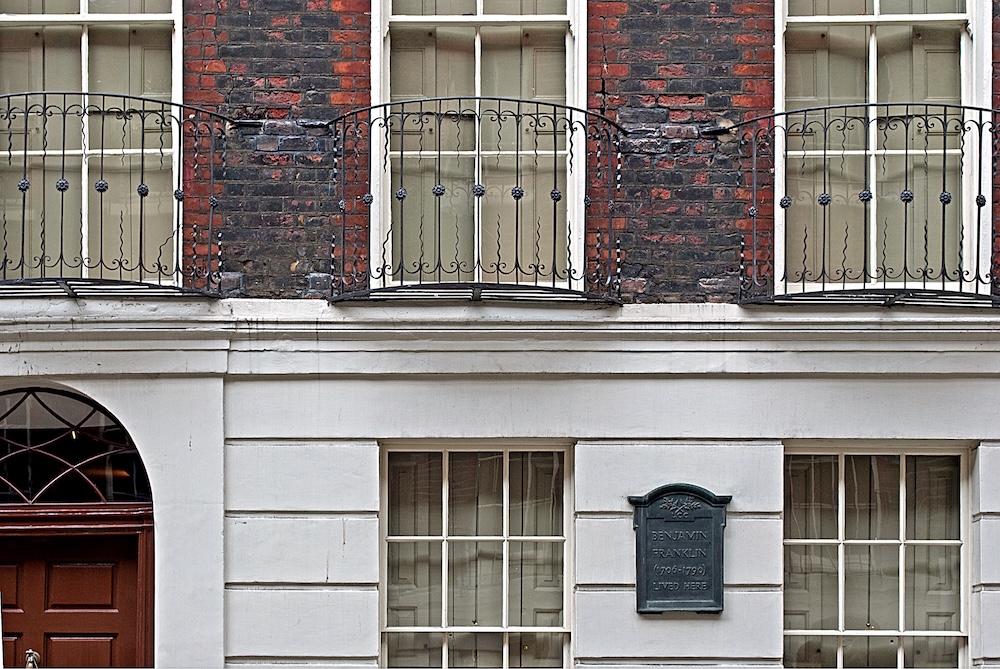 Close up of the exterior sign at Benjamin Franklin House. Photo Credit: © Kim Boyd.
From Slave Owner to Abolitionist
In the basement room at the back of the house – formerly the garden – you can find out about Peter and King, enslaved men who Franklin had purchased when in Philadelphia and who were part of his household. As visitors read what is known about the two men, especially from Franklin’s mentions of them in his letters to his wife Deborah, we are invited to consider their stories and come to our own conclusions. After benefiting from slave-owning by the 1780s, Franklin had become a vocal abolitionist; he freed the remaining enslaved people in his household in about 1785. To find out more about London’s extensive involvement in the history of enslavement, you could book a Black History London Tour with a Blue Badge Guide:
On the first floor, you enter Franklin’s well-lit parlour, where he welcomed prominent guests such as elder statesman William Pitt the Elder (possibly in a house further up the street) and, by contrast, radical Thomas Paine. Franklin urged the out-of-work Paine to depart for Philadelphia and gave him a letter of recommendation which helped to set him up. A little later, in 1776, Paine’s hugely popular book “Common Sense” was published there – seen as one of the foundational texts of the new American Republic.
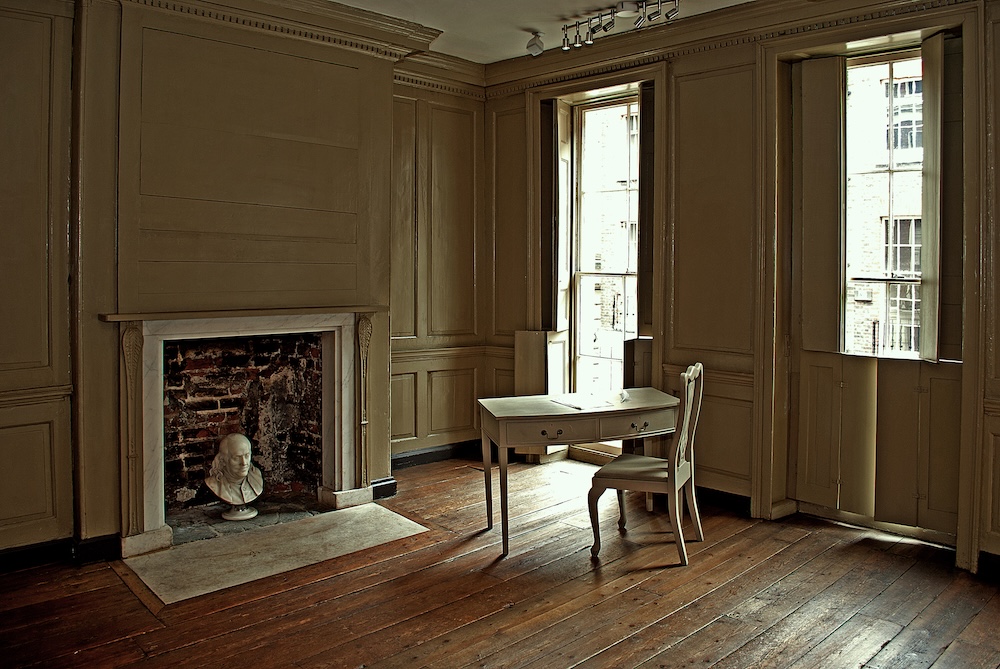 Georgian Fireplace and Writing Desk at Benjamin Franklin House. Photo Credit: © Kim Boyd.
Air Bathing
In the early hours of the morning, Franklin would open up the parlour windows and allow the air to play over his naked body as he sat in his chair, reading or writing. To be clear, nobody would have been up and about at this time, and the occupants of the houses opposite would have been fast asleep, so there is no suggestion of exhibitionism. Franklin’s ritual of “air bathing” for between 30 and 60 minutes was a kind of tonic, which he found much more congenial than a cold-water bath! It often led to a further hour or two’s blissful sleep back in his bed. This was a man who chose his own path in the world!
At the back of the first floor, Franklin had his bedroom, which doubled as his experimental workshop. The space was heated by a Franklin stove – much more efficient than an open fire – and here he invented his armonica – a musical instrument made of glass which Mozart and Beethoven composed for, and the invention which Franklin said he was most proud of. You can see a reconstruction in his first-floor apartment.
Franklin’s most celebrated experiment demonstrated an electrical charge being transmitted through a kite and a key in a thunderstorm back in Philadelphia in 1752. Franklin followed that when in London by designing a lightning conductor for St Paul’s Cathedral. You can book a tour of this major London landmark, completed in 1711, with a Blue Badge Guide.
While wandering around Ben Franklin’s home and tracing his wide-ranging achievements, take time to absorb the atmosphere he breathed: see the original high windows, the shutters, the eighteenth-century panelling, the oak staircase, the floorboards, and the fireplaces.
Look out also for his leather wallet, and imagine it in the hands of this transatlantic colossus: the coffee house-visiting inventor, the diplomat, and the man who went on to become one of the Founding Fathers of the U.S.A.
To visit the house, and for opening times, check the information here: https://benjaminfranklinhouse.org.
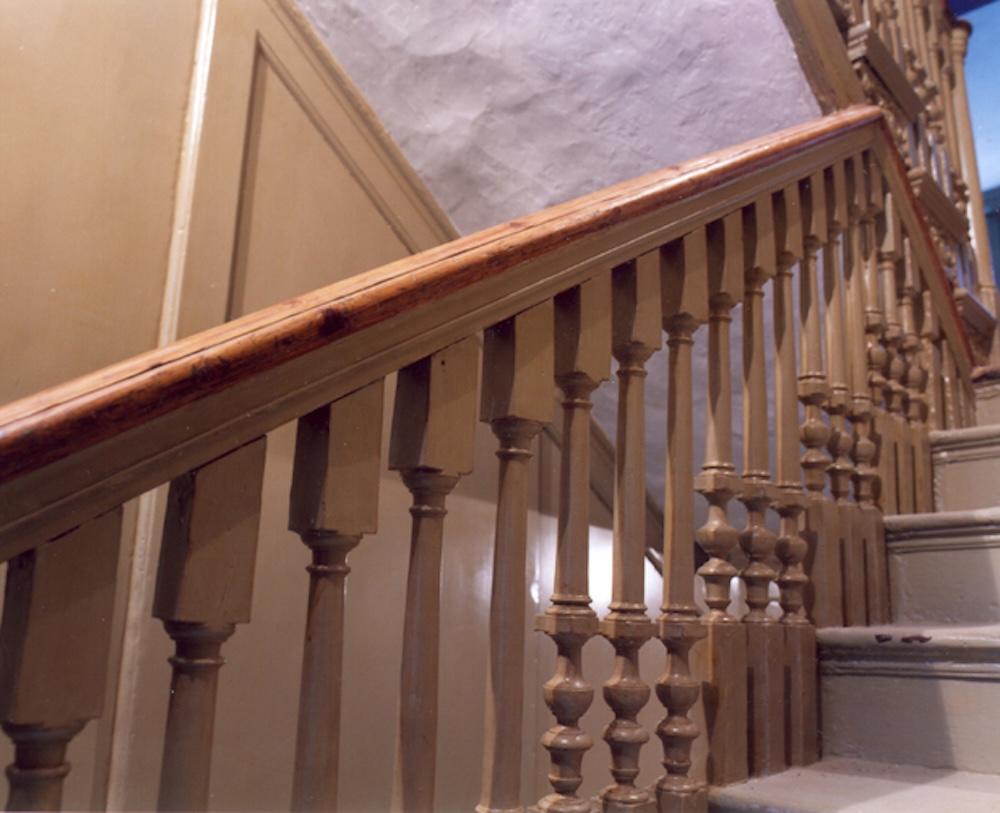 Stairs Detail in Benjamin Franklin House. Photo Credit: © Kim Boyd.
Fancy a Coffee?
Why not follow up your visit with a five-minute stroll along John Adam Street to have a coffee at The Coffee House in the elegant Royal Society of Arts building? RSA House dates from 1774, and Franklin was a Fellow of the Society: picture him engaging in lively conversation with fellow scientists and inventors here – and pop in to see the room named after him.



Leave a Reply