



Spring is here and Whitehall Gardens offers an ideal place to sit awhile and enjoy the colourful spring flowers that are in bloom.
The gardens are within walking distance from Trafalgar Square towards the River Thames (via Northumberland Ave) or the Hungerford or Jubilee Bridges that cross the River Thames. It is just one of the gardens that form the Victoria Embankment Gardens created from 1864 following the embankment of the Thames by Sir Joseph Bazalgette.
The garden laid out in 1875 by George Vulliamy has a wonderful array of shrubbery, bedding displays, mature London plane trees, lime trees and trees of heaven. Three statues stand within grassed islands commemorate William Tyndale (1494-1536), Sir Henry Bartle Frere (1815-1885) and General Sir James Outram (1803-63). Whitehall Gardens offers a hidden oasis enclosed within elaborate railings, reproductions of Bazalgette’s design of 1873. It is also a designated Site of Importance for Natural Conservation for its contribution to wildlife.
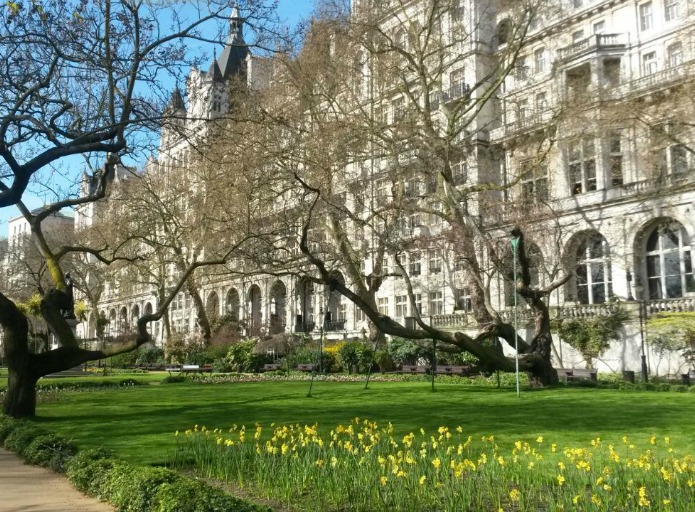
Whitehall Gardens. Photo: ©Angela Morgan.
The building that faces the garden provides an architectural backdrop that transports you to the French countryside. This Grade l listed building is reminiscent of a French Chateau. From 1971 to the present day it is the Royal Horseguards Hotel. Built in 1884 as part of an ambitious development of luxury residential accommodation in Whitehall, the history of One Whitehall Place is very interesting and varied from the fraudulent practices by its 19th century developer & politician Jabez Balfour leaving investors penniless, to it being the headquarters of the Secret Service during the Great War 1914-18. Oh of the secrets that could be told!
On the topic of secrets, take a short walk from the gardens to the front of the hotel where you will see a recently unveiled blue plaque to the original “M” fictionalised in the James Bond stories -Sir Mansfield Cumming who was the first Chief of the Secret Intelligence Service (1909 -1923) who would sign correspondence using the initial “C”. The practice still continues to this day with his successors using the same initial.
Thinking back to the gardens, Whitehall Gardens may have its own secrets too.
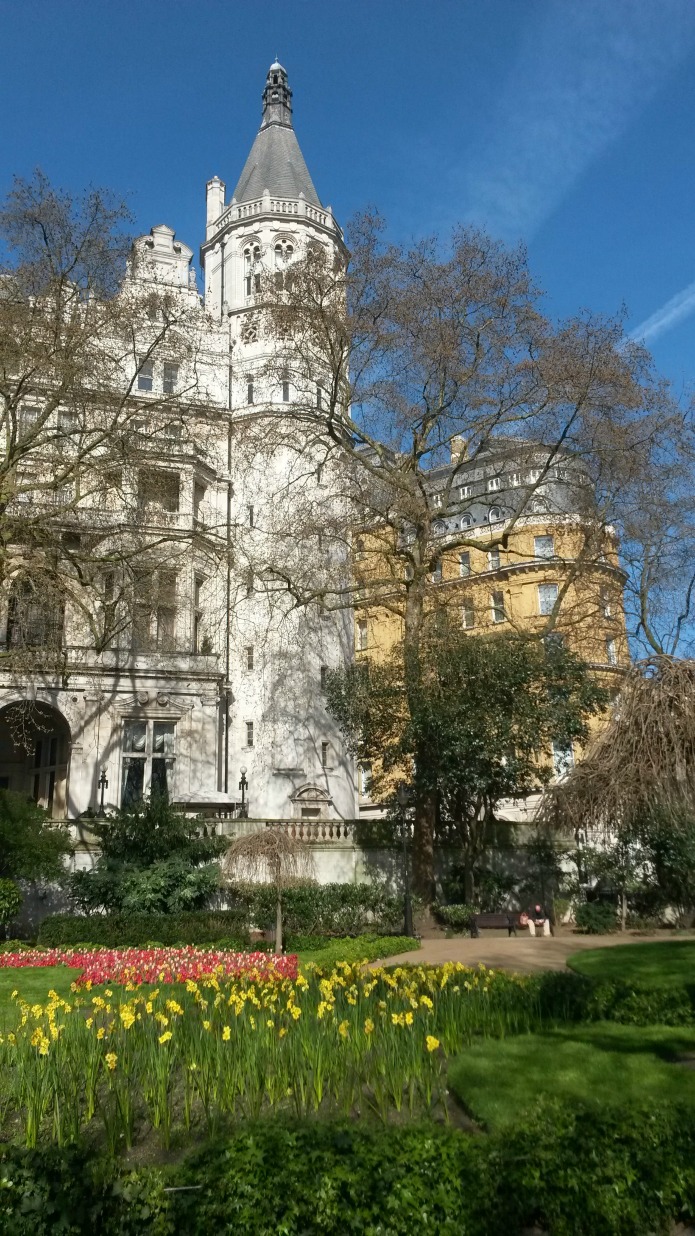
Whitehall Gardens. Photo: ©Angela Morgan.


Leave a Reply